How to Start a Phone Case Vending Machine Business in Australia
Phone case vending machine wholesale supplier Australia. Custom printers, factory pricing, 73-88% margins. Bulk orders.

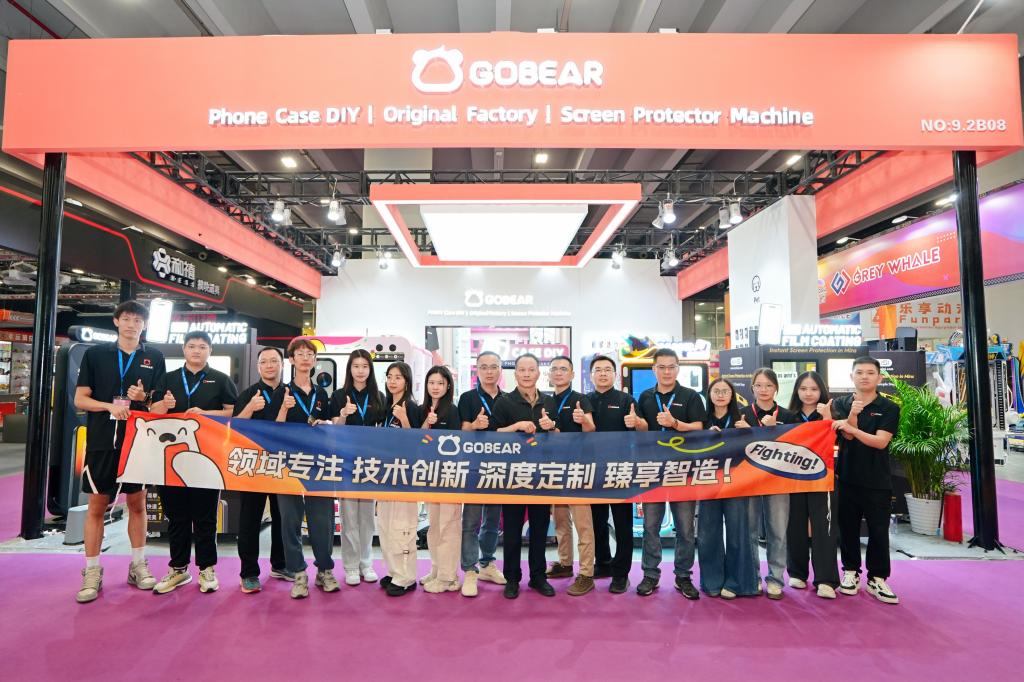
I'm the COO of GOBEAR. We help entrepreneurs, mall operators, 3C mobile stores, event venues, and campus retailers tap into high-margin, low-maintenance vending models.
Learning how to start a phone case vending machine business in Australia often begins with the allure of 80% margins and sub-3-month payback—yet that same model can deliver only 125% annual returns when a site is picked on a handshake instead of foot traffic data.
This analysis benchmarks real-world location economics against your capital outlay, breaking down actual revenue ranges (AU$1,200–$4,500/month per machine), fixed and revenue-share rent models, and the AU$8,500–$18,000 all-in startup cost that separates a 950% ROI prime spot from a cash-draining corridor.
Australia’s high smartphone ownership and self‑service culture make it a prime market for custom phone case vending with fast ROI.
High‑traffic venues like shopping centres, airports, and universities provide the ideal placement for phone case vending machines. Custom printing capability sets operators apart and lets them charge higher prices—$15–25+ per case with material costs under $2.50, producing margins of 73–88%. Startup costs sit between USD 5,000 and 15,000, and well‑placed machines can pay back in 5–8 months. Existing players like Case Xpress and Pic Case O have already proven the model, reducing the need for market education. Bundling screen protectors or accessories and targeting instant replacement needs adds extra revenue on top of the core case sales.
Australians treat phone cases as a personal style statement, pushing demand for customisation and photo‑based designs. Self‑service and automation are the norm—consumers expect fast, controlled experiences, and vending machines deliver that in under five minutes. Cashless payments are near‑universal, so tap‑and‑go support is a must. While online options exist, buyers willingly pay a convenience premium for instant access, particularly when they need a replacement fast or are travelling. There’s also a growing appetite for durable materials and more sustainable case options, which supports premium pricing and repeat sales.
You need an ABN and likely a written site agreement. No food licence required for phone cases.
An Australian Business Number is your first real step when setting up a phone case vending operation. The Australian Business Register handles this online, and the process is free. You cannot invoice a shopping centre or supplier without one, so get it sorted before you talk to venues.
The ABN application will ask about your business structure. This isn't a trivial checkbox. Sole trader, partnership, company, or trust — each option shifts your tax obligations and personal liability. Pick the structure first, then apply. If you change your mind later, you are looking at paperwork and potential re-registration.
While you are in the registration flow, check whether GST registration applies to your situation. If your projected turnover pushes past the GST threshold (currently $75,000 annually), you need to register. Phone case margins are strong, but if you land a high-traffic site moving 500-plus cases a month, that threshold arrives faster than most new operators expect.
A machine selling phone cases is not a food premises. No food-safety permit or food-handling registration applies. State-level food vending rules — like Victoria's Food Act requirements — simply do not cover non-food items. You can skip that entire category of compliance.
What does apply is the real-world permission to occupy space. Shopping centres, transport hubs, and private venues all require a formal agreement before your machine sits on their floor. This can be a lease, a licence, or a vending agreement. The name on the document matters less than having it in writing. Verbal agreements fall apart the moment a centre manager changes or a rent dispute arises.
Local council rules vary. Some councils treat vending machines as structures requiring placement approval. Others have specific rules around digital signage, lighting, or machine size. Call the council where your target site sits and ask directly whether a permit applies. Do not rely on what the venue manager tells you — it is your machine, your liability, and your problem if a compliance officer disagrees.
A final practical note: if you later add food, drinks, or any regulated product to the machine or an adjacent unit, the entire licensing picture changes. Food-vending registration, food-handling requirements, and council notification kick in. Plan for that compliance cost before expanding your product range.
Prioritise compatibility, speed and contactless payments. For imports, calculate the full landed cost and line up local support before you commit.
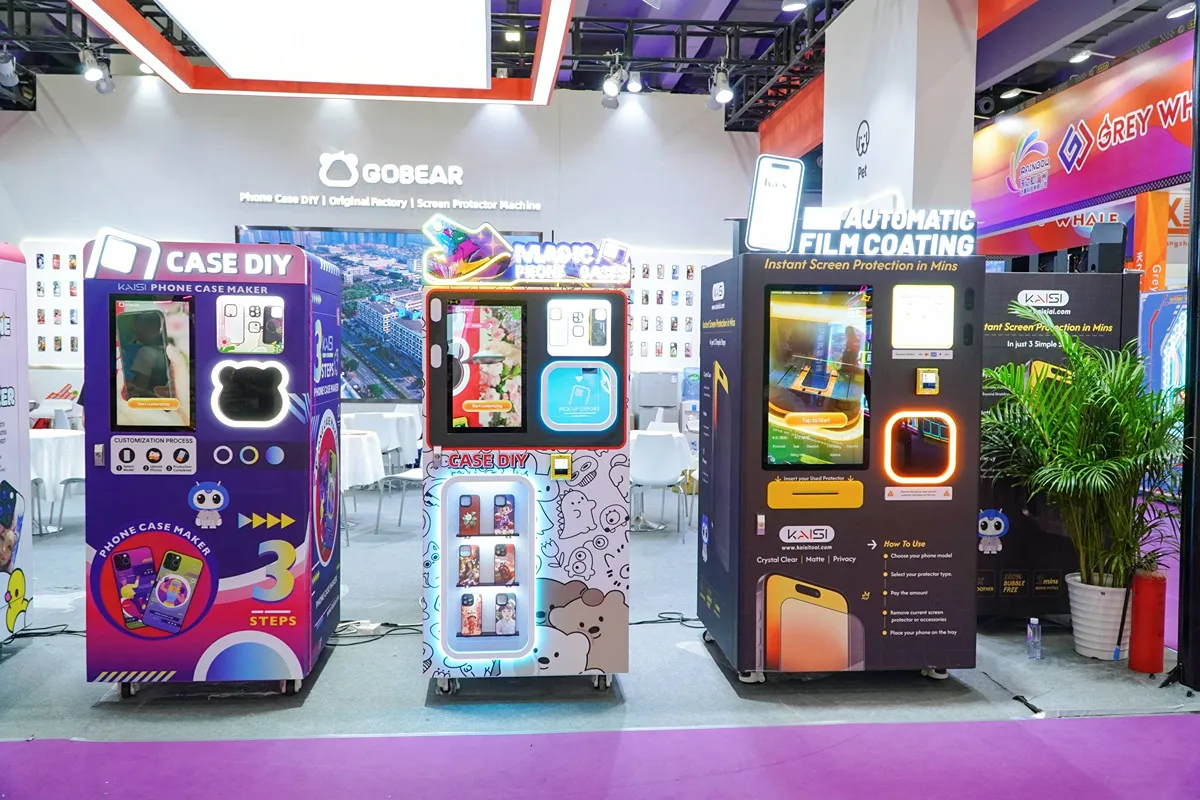
Start with device coverage. Your machine needs to support the iPhones and Android models that most shoppers actually carry. Stocking blanks for current flagships and the top-selling mid‑range devices keeps the addressable customer base as wide as possible. If the machine can’t fit the phones walking past it, the location won’t matter.
Speed is the next filter. The whole flow — selecting a phone model, uploading or choosing a design, paying, and having the finished case in hand — should take under five minutes. Systems that deliver in three to four minutes fit easily within the average dwell time at a shopping centre food court or cinema foyer. A fast, intuitive interface keeps people from walking away mid‑transaction.
The customer journey should be fully touchless. A QR code on the screen lets users upload images from their own phone, preview the design, and complete the payment without staff involvement. That self‑serve workflow reduces the need for an attendant and matches the behaviour consumers already expect from unattended retail.
Payment hardware matters just as much. Tap‑and‑go card readers and mobile wallet support (Apple Pay, Google Pay) aren’t optional in Australia; they’re the baseline. The machine also has to operate reliably 24/7 without on‑site staff. Downtime in a high‑traffic venue can wipe out a day’s revenue, so build quality and remote monitoring capabilities are non‑negotiable.
Venue fit sits alongside the technical specs. The units that perform best are built for high‑footfall environments — shopping centres, transport hubs, tourist precincts — where impulse purchases, emergency replacements and gift grabs drive volume. Finally, look hard at the supplier’s support package. Installation, maintenance training, spare parts availability and software updates all contribute to uptime. A machine without fast local parts access becomes a liability the first time a print head fails.
The factory price tells you almost nothing about what the machine will actually cost on‑site in Australia. Start with the landed cost: the ex‑works price adjusted for exchange‑rate movement, plus international freight, marine insurance, and all local charges that hit before the machine is ready to plug in. Kiosk‑style vending units are bulky, so freight planning needs to cover packaging, palletisation and final‑mile delivery into your target city.
Clearing customs requires clean commercial documents — supplier invoices, a detailed packing list, and accurate product descriptions. Australian Border Force will classify the machine under a specific tariff code, which determines whether any customs duty applies. Even if duty is low or zero, the shipment will attract GST on the total of the customs value, duty, freight and insurance. Budget for broker fees as well; a few hundred dollars is normal per consignment.
Electrical compliance is a hard gate. The machine must run on 240V/50Hz and meet Australian standards, with the correct plug and safety certifications. If the unit ships with a different voltage setup or lacks local certification, you’ll need an electrician to sign off on it before it can legally operate in a venue. The same goes for the software stack — cloud connectivity, payment gateways and remote monitoring have to work on Australian networks without lag or compatibility gaps.
Once it’s live, your biggest risk is downtime caused by a shortage of consumables or spare parts. Confirm ongoing access to printer components, case blanks, model‑specific inserts and any other wear items. A supplier who can’t put a replacement print head or mainboard into Australia quickly will cost you far more in lost sales than any upfront saving on the hardware. Local serviceability is the final filter: machines backed by an Australian distributor for repairs, firmware updates and technical support are far easier to run than those that force you to manage every issue from an overseas help desk.
Shopping centres, CBD hubs, and tourist precincts each offer distinct traffic patterns and revenue profiles—pick based on your risk appetite and machine type.
| Location Type | Target Micro-Spots | Typical Rent (AUD/month) | Revenue Range (AUD/month) | Key Advantage |
|---|---|---|---|---|
| Shopping Centres | Food courts, cinema entries, escalator landings, car park entries | $300–$800 flat or 10–15% revenue share | $1,200–$4,500 | Secure, monitored, predictable trading hours |
| CBD Locations | CBD malls, transit concourses, office tower lobbies | Higher than suburban; revenue share common | Upper end of $1,200–$4,500 range | Dense mix of office workers, shoppers, students, and tourists |
| Tourist Areas | Airports, gift shop entrances, photo hotspots, cruise terminals | $100–$1,000 (premium spots at higher end) | $1,200–$4,500+ (airports can exceed this) | High impulse conversion, premium pricing tolerance |
Shopping centres deliver consistently high daily foot traffic paired with a strong buying mindset. Customers already browse fashion and electronics, so a phone case machine sits naturally in the purchase flow. Long dwell times around food courts, cinema foyers, and escalator nodes push impulse conversion rates well above street-level placements. Centres also provide monitored environments, reliable power, and fixed trading hours—eliminating most security and operational headaches.
Existing operators—Case Laboratory, SnapShell, and Xvend—have already mapped the winning micro-locations inside Australian centres:
Target regional and super-regional centres first—Westfield, GPT, and Vicinity properties—where daily passers-by exceed 5,000. Manually count foot traffic across multiple time blocks (morning, lunch, after-school, evening, weekend) before signing. Confirm the machine stays visible from multiple approaches and sits near CCTV coverage.
Commercial terms in malls typically land at a flat rent of AUD $300–$800 per month for a small vending footprint, or 10–15% of turnover if the centre prefers revenue share. Push for a 3-month trial period before locking into a long-term licence. This lets you validate the micro-location without getting stuck in an underperforming spot.
Australian CBDs concentrate office workers, city shoppers, university students, and tourists into a few square kilometres. This density creates sustained all-day foot traffic that suburban centres simply cannot match. Phone case machines in CBD retail complexes combine mall-level dwell time with CBD-level daily volume, pushing them toward the upper end of the AUD $1,200–$4,500 monthly revenue band.
Real-world placements already validate this approach. SnapShell operates inside Westfield Sydney and City Cross in Rundle Mall, Adelaide. Case Laboratory placed a machine at Uptown Brisbane (Level A, next to bus stop 1D), capturing commuters moving between buses and retail. These CBD-centre deployments work because they inherit the security, power, and cleaning infrastructure of the mall while tapping into worker and commuter flows that suburban centres lack.
CBD rents run higher than suburban centres, but the revenue ceiling rises in parallel. A machine pulling AUD $3,500–$4,500 per month in a CBD mall can absorb a larger site fee and still deliver strong net margins. Prioritise CBD malls first, then expand to building lobbies and transit nodes after proving performance in the controlled retail environment.
Tourists actively take photos and depend on their phones for navigation, tickets, and payments—making phone protection a relevant, timely purchase. Damage risk spikes from outdoor activities, crowded attractions, and water or sand exposure at coastal destinations. A custom-print machine turns a protective purchase into a personalised souvenir, adding value beyond utility and supporting AUD $20–$40 price points per case with profit margins of AUD $15–$35 per unit.
The most commercially attractive micro-locations in tourist environments fall into four categories:
Custom-print machines work particularly well in tourist zones. A visitor can print their own photo of the Opera House or Great Barrier Reef directly onto a case in 3–5 minutes, creating a functional souvenir with higher perceived value than a generic gift shop item. Pre-load location-themed templates—city skylines, beach motifs, local icons—to capture the segment that wants a souvenir but lacks a suitable photo.
High-rent tourist sites like airports and flagship attractions call for short-term trials and performance-based leases. A revenue-share arrangement (percentage of gross sales) aligns incentives and reduces upfront risk. Validate revenue levels over 3 months before committing to a full-term agreement. Tourist areas carry seasonal volume swings—coastal destinations peak in warmer months, while indoor attractions and airports provide more stable year-round traffic.
Budget for the machine itself plus freight, GST, duty, and compliance costs—not just the sticker price.
A dedicated phone case vending machine sits in the AUD $5,000 to $15,000 range per unit. That spread exists because you have choices—buying new, picking up a used unit, or leasing—and each path changes your upfront cash position.
New machines come with a warranty and the latest printing hardware. Used or retrofitted units cut the purchase price but often need extra work—software updates, branding, and configuration—that closes the gap faster than you would think.
The sticker price is only part of the story. A machine quoted at $10,000 can easily land at $12,000–$13,000 once you add freight, software setup, and local delivery. Build those line items into your budget from day one.
Most phone case vending machines come from overseas manufacturers. The landed cost in Australia includes freight, insurance, duties, and GST—all of which hit before the machine earns a single dollar.
Get a landed-cost quote from your supplier before committing. Request the ex-factory price, freight method, insurance, and the HS tariff code. Then run those numbers through a customs broker for a precise duty and GST estimate. A 10–15% contingency on top of the total import cost covers currency swings, unexpected port charges, and minor compliance fixes.
A well-placed machine can pay for itself in 3 months and deliver 380%+ annual returns. Poor site selection kills the model.
| Scenario | Cases/Month | Gross Profit | Net Profit | Payback | Year-1 ROI |
|---|---|---|---|---|---|
| Low-Traffic | 50–100 | AU$1,500 | ~AU$1,040 | ~10 months | 125% |
| Base Case | 150–400 | AU$5,000 | ~AU$3,830 | ~3 months | 380% |
| Prime Location | 500–1,500 | AU$16,000 | ~AU$11,950 | ~1.25 months | 950%+ |
Your revenue depends almost entirely on where you put the machine. Foot traffic volume, dwell time, and how many people are glued to their phones at the site dictate unit sales.
The unit economics stack up fast because the product margin is unusually high. A standard custom-printed case sells for AU$25 and costs about AU$5 in materials. That leaves AU$20 in gross profit per case — an 80% margin that most retail categories can only dream about.
Monthly sales volumes break into three clear bands based on location quality:
These are not theoretical ceilings. Global operators in comparable high-traffic venues consistently report US$7,500–37,500 in monthly revenue, which lines up with the upper bands here after currency conversion.
The all-in startup cost per machine in Australia lands between AU$8,500 and AU$18,000. This covers the hardware, initial inventory, delivery, installation, and basic business setup costs. Leasing options can lower the upfront cash outlay, but the total capital commitment sits in that range.
Payback speed is a direct function of sales volume. The numbers tell a clear story:
Year-1 ROI figures make the case even stronger. A weak site generating AU$1,040 net per month on a AU$10,000 outlay still delivers 125% return in the first 12 months. A solid location at 250 cases per month with a AU$12,000 machine yields about 380%. And a prime site moving 800 cases monthly on a AU$15,000 investment can exceed 950% annual ROI.
Those top-tier returns only happen in ultra-prime venues — major airports, flagship CBD malls, and the busiest university campuses. The gap between a 125% and 950% return comes down to site selection, not the machine itself. Pick the wrong spot and you still make money; pick the right one and the math borders on absurd.
Bad placement and ignoring compliance can turn a high-margin machine into a liability. Avoid these common traps.
A phone case vending machine lives or dies by its position. Many operators fall into the same five location traps, killing revenue before the business has a chance to prove itself.
First, they pick venues with weak foot traffic or the wrong crowd. A small office with 40 staff or an industrial site where phones stay locked away will never generate enough impulse buys. The machine needs constant flow from people who are on their phones, actively using them, and likely to damage or lose cases. Shopping centres, airports, universities, and tourist hubs deliver that – quiet back corridors and low‑density workplaces do not.
The second mistake is ignoring product–location fit. Stocking the latest iPhone cases doesn’t help if a centre’s visitors predominantly use mid‑range Samsung devices. Equally, a custom‑print machine that relies on users spending time designing at the screen flops in a fast‑paced transit corridor where everyone rushes through. Watch what phones people actually carry, talk to venue management about the visitor profile, and match the machine’s device compatibility and design templates to what you see.
Nearby competition also sabotages many placements. Placing a machine two metres from a staffed phone accessories kiosk or an electronics store offering cheap cases undercuts any convenience advantage. Perform a competitive scan on foot – note every phone accessory retailer and other vending machine selling similar items within a few hundred metres. Look for gaps where customers genuinely lack easy access, or position near phone repair kiosks and telco outlets where people discover they need immediate protection.
Visibility and accessibility matter just as much as traffic. A machine hidden behind a pillar, placed in a dimly lit alcove, or blocked by temporary displays won’t get noticed. Secure spots on main walkways, near escalator choke points, or in waiting areas where people naturally pause. Confirm adequate lighting, power, and clearance so customers can stand and operate the screen without blocking others.
Finally, new operators often cling to weak spots too long. A machine might show poor daily transactions for months despite tweaking pricing and signage. Define clear exit rules before installation – maybe a minimum of X transaction per day or a monthly revenue floor that justifies rent and consumables. If performance stays below that threshold after 6–9 months, move the machine. Relocate to a better venue rather than letting sunk‑cost thinking drain your margins.
Compliance isn’t optional. Australian operators who skip the paperwork risk fines, forced removal, and reputational damage. Here are the seven regulatory areas operators most commonly overlook.
A written site agreement ranks first. A verbal nod from a venue manager means nothing when they suddenly demand higher rent or move your machine to a dead zone. Get a signed contract covering placement duration, renewal terms, rent or revenue‑share percentage, power costs, and your right to approve any relocation. Vending runs on predictable unit economics; a handshake deal destroys that predictability.
Council and planning permissions catch many out. In any public or semi‑public space – footpaths, transport interchanges, council‑owned facilities – you may need a permit for what councils class as street furniture, advertising structures, or moveable commercial objects. Check with the local council before installation. For shopping centres, airports, and university sites, confirm that the venue’s internal rules also align with any council or state requirements.
Electrical safety compliance is not negotiable. Your machine is a powered device with touchscreens, printers, and payment terminals. It must comply with Australian/New Zealand electrical standards, and the site’s facility manager will expect evidence – certification documents, tagging, and safe placement that doesn’t block exits or fire equipment. Non‑compliance can see the machine disconnected on the spot.
Australian Consumer Law applies to vending, too. If the machine fails to dispense or prints a defective case, you must have a clear refund and replacement process displayed. Custom‑printed cases add a layer of complexity: you print what the user uploads, but you’re still responsible for the physical quality of the product. Use an Australian payment gateway that supports compliant card processing and provides clear transaction records for dispute handling.
Intellectual property risks rise sharply with custom printing. Users may upload copyrighted logos or offensive images. Without on‑screen terms and basic content controls – such as banning offensive keywords or having a takedown notice procedure – you and the venue could face legal liability. A content safety net protects both your business and the location owner.
Data privacy expectations are real, even for small businesses. Your machine may process user photos and payment data. Delete images as soon as the print job finishes, avoid storing unnecessary personal details, and ensure payment data is handled solely by a secure third‑party processor. A short on‑screen privacy notice reinforces customer trust.
Insurance is frequently neglected until an incident occurs. Public liability insurance covers harm to people or property around the machine. Property insurance protects the machine and stock against theft or damage. Most venues mandate at least public liability before allowing installation. Sort it out before you place the first unit, not after a claim.
Scaling a profitable phone case vending network demands more than capital—it requires the site-selection discipline and compliance rigour mapped out above. Skipping a signed location agreement or settling for a low‑traffic corridor turns a 3‑month payback machine into dead weight. The financial benchmarks and venue‑vetting checklists in this guide are your only structural defence against margin erosion and forced relocation.
Don’t leave a high‑margin opportunity to guesswork. Book a strategic session to pressure‑test your target venues against the footprint‑count and micro‑location filters that separate top performers from write‑offs. Get in touch to build your phased rollout plan before a competitor locks down the best spots.
Share your business vision with us. Our automated retail experts will craft a tailored strategy and a comprehensive profitability report to unlock your next revenue stream.