How Much Money Do I Need to Start a Phone Case Business in USA
Phone Case Business Startup Cost: Explore investment from $500 (POD) to $284K (retail). Get B2B cost models and rapid RO...

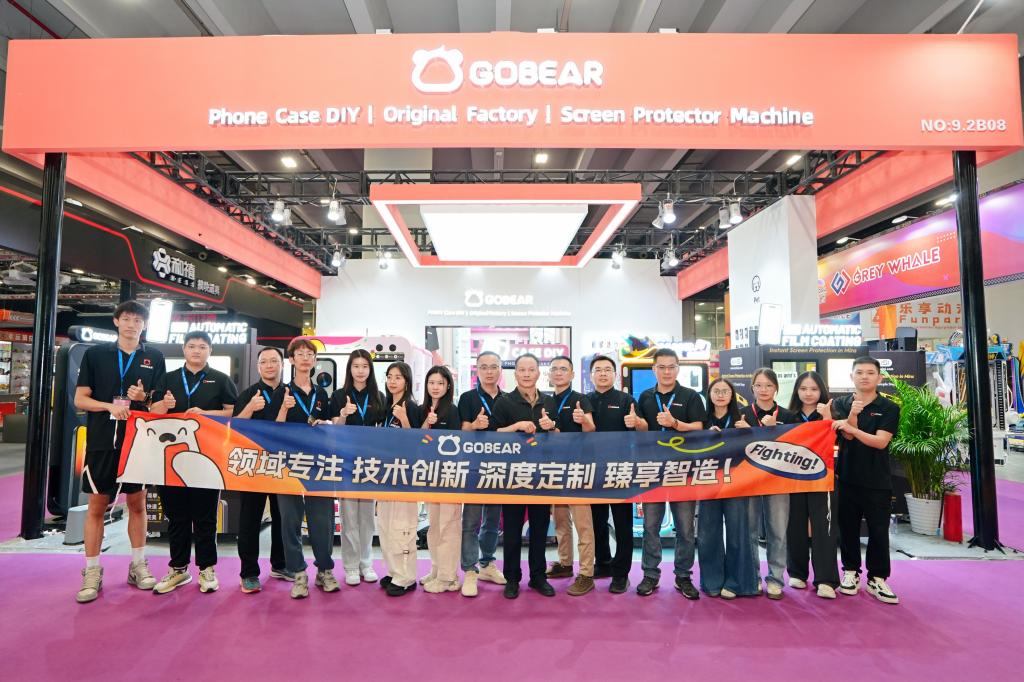
I'm the COO of GOBEAR. We help entrepreneurs, mall operators, 3C mobile stores, event venues, and campus retailers tap into high-margin, low-maintenance vending models.
How to start a phone case vending machine business in Australia begins with a sobering financial truth: the gap between a $400/month net profit and $3,000+ is not the machine—it’s the micro-location.
This analysis benchmarks real deployment data from Australian shopping centres, CBDs, and tourist hubs against the unit economics that separate viable assets from expensive storage. We evaluate gross margins of 73–88%, material costs of $2–$4 per case, and the payback timelines that turn a $15,000 landed machine into cash-flow-positive within 6–12 months in the right spot.
Australia’s high smartphone turnover and acceptance of self-service retail make it a ready market for automated phone case sales.
The Australian market isn’t just open to phone case vending. It already has operators proving the model works in Adelaide, Sydney, and Melbourne. This validates two things for a new entrant: consumers understand the concept, and landlords will sign site agreements for it.
The fundamentals stack up quickly. Australia has one of the highest smartphone penetration rates globally, and a culture of frequent upgrades. Every time a new iPhone or Samsung Galaxy drops, it resets the clock on accessory demand. The global phone case market is projected to move from US$16.41 billion in 2025 to US$20.70 billion by 2029. Australia tracks this growth in both volume and value, with shoppers willing to pay for both protection and design.
But the real signal is the infrastructure fit. Smart vending, the segment that includes custom-printing machines, is growing at around 11% CAGR. Australian malls, transport hubs, and campuses keep adding self-service options for everything from electronics to cosmetics. Shoppers here treat a touchscreen transaction as normal, not novel. That changes the adoption math for a new machine placed in a food court or near a telco store.
The unit economics are what separate this category from standard vending. Based on global benchmarks relevant to Australia:
The startup cost is lean. A modern printing-capable machine runs US$5,000–15,000. Site rent or revenue share typically ranges US$100–1,000 monthly. There’s no permanent staff. Once one machine works in a CBD mall, you can replicate the agreement structure across similar centres, airports, and campuses. Scaling means more contracts, not more overhead.
The location playbook writes itself: CBD shopping centres, major airports, university campuses, tourist precincts, and event venues. These are places where phone use is high, dwell time is long, and the decision to buy a case happens in seconds.
Shoppers here don’t just buy cases. They buy customisation, speed, and a frictionless interaction. The machines already operating in Australia prove this. Adelaide’s unit lets users print any image from their phone. Sydney’s produces a custom case in about 4 minutes. Melbourne’s CASE XPRESS runs on “tap, print, and go.” The value proposition is instant and visual.
Several behaviours work in favour of a vending-based model:
Aesthetic preferences lean toward slim, durable cases that fit recent flagship models. But local and seasonal designs matter. City skylines, beach themes, and sports team colours sell in the right precincts. The machines themselves also generate organic marketing. Users film the process for TikTok or Instagram, giving free visibility to the location and the concept. That viral loop is harder to replicate in a standard kiosk.
Quality is now part of the value equation. Shoppers increasingly connect a durable case with extending their phone’s lifespan, which taps into a broader shift toward reducing waste. High-quality materials and print finishes support a higher price point and a repeat buyer.
Phone case vending bypasses food regulations. You need an ABN, site agreements, and public liability insurance—that covers the core legal setup.
You register an ABN free through the Australian Business Register. Without one, you cannot legally operate, report income, or issue invoices. Landlords and councils will ask for it upfront.
Pick your business structure before applying. Sole trader works fine for a single-operator setup. A company structure limits personal liability and makes sense when scaling to multiple machines across different sites. The structure you choose affects tax treatment and ASIC obligations, but it does not change vending-specific licensing requirements.
Register a business name with ASIC if you trade under anything other than your legal name. Shopping centres and corporate landlords expect professional contracts, and a registered business name makes those site agreements cleaner. If you operate as "John Smith" personally, you can skip this step.
GST registration kicks in when your annual turnover hits or is projected to hit AUD 75,000. A single machine in a modest location might stay under the threshold, but custom-print machines in high-traffic malls can scale revenue fast. Forecast revenue across all your machines and register when you approach that number. Once registered, you charge GST on every case sold and lodge BAS statements.
Keep clean records of machine revenue, stock purchases, and site commissions. Profits get declared as business income. If you sell the business later—machines plus contracts—capital gains tax may apply to the gains.
Phone case vending machines sell non-food, low-risk retail goods. You skip food premises registration, food safety plans, and health inspections entirely. That regulatory burden applies to snack and drink machines, not to cases and accessories.
Australia has no single national vending licence. What you need depends on where each machine sits. For private commercial sites—shopping centres, airports, university campuses—the primary legal instrument is a site agreement with the landlord. This contract sets out permission to operate, duration, revenue sharing or fixed rent, and access rights for restocking and maintenance. Indoor machines typically rely on these private agreements plus your ABN and insurance. Nothing else.
Outdoor or public-land machines are different. Check with the local council for each proposed location. Some councils require a street trading permit or public place trading approval even for non-food vending devices. Others only need an ABN for indoor vending but may ask for a low-risk business notification. There is no uniform rule—confirm directly with the council for each machine's address.
Insurance functions as a de-facto licence. Landlords will not sign a site agreement without proof of coverage. The minimum requirements:
Electrical compliance matters too. Any accessories you sell—chargers, cables, power banks—must meet Australian electrical safety standards. The vending machine hardware itself needs to comply with electrical safety and EMC requirements. Venues often ask for test-and-tag documentation and proof of RCM compliance on imported equipment.
State and territory variations exist. Some councils only want an ABN for indoor non-food vending. Others require a low-risk business notification even for a simple phone case machine. Before installing any machine, call the local council for that specific address and ask about vending, street trading, and public place trading permits. Get any approvals in writing and keep them on file.
Invest in on-demand printing, 1000+ case capacity, and full Australian payment support. Prioritise local service over rock-bottom import price to avoid downtime.
You need a machine that prints a photo-quality custom case in under 5 minutes. Anything slower creates queues during school holidays and Saturday peaks, and you lose impulse buyers. Modern units like the Wider Matrix WM880 and locally deployed SnapShell machines hit that mark, keeping the flow at busy centres moving.
Ink and blank capacity matter more than you might think. Look for 2000 ml ink tanks that crank out 2000–2500 cases between refills, and internal storage for 1000+ blank cases. This cuts your restocking trips to roughly weekly—critical when you’re managing multiple sites across suburbs. Weekend spikes in a Westfield food court will drain a small-capacity machine fast, and an ink-out error on a Sunday afternoon kills revenue.
The user workflow must match how Australians actually use their phones. A QR code on the machine that lets people upload and design from their own device works far better than a clunky on-screen keyboard. Pair that with a simple touchscreen for model selection and payment confirmation. The SnapShell model in Adelaide and Sydney already proves this: scan, pick a photo, preview, pay, and collect—smooth and familiar.
Contactless payment support is non-negotiable. Your machine must take Apple Pay, Google Pay, and major debit/credit cards out of the box. In a cash-light market like Australia, a vending machine that only reads notes will sit unused. Also, ensure the payment module is PCI-DSS compliant and works with Australian acquirers—landlords check this.
Remote cloud management gives you control from your phone. You need real-time alerts for low ink, a paper jam, or a failed print, so you can respond before the next shift. The software should also let you adjust pricing across all machines at once, track sales by hour and by phone model, and spot which location justifies a second machine. Without this, you’re driving around blind.
The machine’s physical build counts. Shopping centre managers will reject a unit that’s too loud, too hot, or flimsy. A robust, lockable cabinet with silent operation and compliance to local electrical safety standards (AS/NZS 3000) makes approvals easier. The footprint should slip into a standard kiosk space without blocking corridors.
Reliability backed by Australian support is the single biggest factor that separates a profitable machine from a giant paperweight. You need a supplier that stocks spare parts locally—print heads, control boards, sensors—and has a support team within AEST hours. A clear warranty on critical components, especially the print head, protects you. Machines already operating in local malls (like City Cross in Adelaide or District Docklands in Melbourne) have field-tested uptime, so preference goes to those with a proven track record here.
Electrical compliance is your first checkpoint. The machine must meet Australian standards, run on 230V/50Hz, and carry the appropriate RCM mark. Shopping centre management and insurers will ask for documentation. If you import a unit without certified compliance, you’ll face costly retrofits or outright rejection before you ever plug it in.
Landed cost is what actually leaves your bank, not the headline price. On top of the machine cost, add sea freight, customs duty (if applicable), 10% GST on the total taxable import value, port handling, and brokerage. If the supplier quotes in USD, the AUD/USD exchange rate can swing between order and payment, so build in a buffer. Get a customs broker to classify the machine correctly under the appropriate tariff code for automatic goods-vending machines.
Shipping method impacts both cost and timeline. Sea freight is the standard for machines this size—it’s slower but far cheaper. If you want the machine running quicker, air freight will eat your margin. Whichever you pick, invest in proper crating and marine cargo insurance. Print heads and acrylic panels don’t like being bounced around. Inspect the machine as soon as it arrives and document any transit damage to preserve your warranty claim.
Installation and commissioning aren’t just plug-and-play. You’ll likely need a licensed electrician to connect the machine to the centre’s power supply, plus a network setup (4G/5G or wired) for payments and cloud monitoring. Ask the supplier what remote commissioning they offer. Some local partners will send a tech to do the first setup—that saves hours of frustration.
Warranty and spare parts strategy is the real difference between a good import deal and a disaster. Confirm in writing that the manufacturer’s warranty covers use in Australia. You want a clear process for claiming parts and returning defective components without waiting weeks. Order an initial spares kit with a spare print head, control board, and key sensors. Having those on hand turns a major breakdown into a same-day fix instead of a month-long wait for a shipment from China.
Local Australian suppliers (like vendors offering Pic Case O or SnapShell machines) often cost more upfront but handle compliance, provide on-site training, and stock parts locally. For your first machine, paying that premium buys you speed to market and fewer operational headaches. Once you’ve got the processes down, importing subsequent units can lower your capital per machine. That’s the rational trade-off, not a blind loyalty to one buying channel.
Phone case vending machines earn AU$1,800–AU$6,700/month in top malls. The real money sits in micro-spots—food courts, travelators, and supermarket entrances—not random corners.
| Location Type | Best Micro-Spots | Typical Rent / Deal | Gross Revenue Range |
|---|---|---|---|
| Shopping Centres | Food courts, travelators, supermarket entries, cinema zones | AU$450–$1,200/month or 10–15% of sales | AU$1,800–$6,700/month |
| CBD Locations | Pedestrian malls, transit hubs, office lobbies | High per-sqm; push for percentage-of-sales | Comparable to malls in strong foot-traffic spots |
| Tourist Areas | Airport departures, baggage claim, tourist corridors, attraction exits | Varies; airports often higher with stricter procurement | Premium pricing tolerated; souvenir cases lift margins |
Australian shopping centres are the primary engine for phone case vending machines. Top-performing malls generate AU$1,800–AU$6,700/month gross, but the placement inside the centre makes or breaks the numbers. You don't want a quiet corridor; you want the spots where people naturally stop or slow down.
The high-traffic micro-spots that consistently perform are food courts, areas near travelators, main entries, supermarket anchors, and cinema zones. Real Australian sites already host successful machines in these exact positions—The Glen food court in Victoria, Eastland's travelator landing on level 2M, and beneath Coles at Rhodes Waterside near the carpark entry.
When scouting a centre, look for 5,000+ daily visitors moving through the immediate area. The demographic sweet spot is young adults and families—people who buy cases impulsively and replace them regularly. Position the machine next to phone repair kiosks, JB Hi-Fi, or telco stores. These shoppers already have accessories on their mind, so conversion rates jump.
CBDs concentrate office workers, students, and tourists in tight geography. These people live on their phones and often need quick accessory fixes between meetings or commutes. A broken case on the way to work becomes an immediate purchase when a machine sits in the lobby.
The strongest spots are pedestrian malls like Pitt St Mall in Sydney, Bourke St Mall in Melbourne, and Rundle Mall arcades in Adelaide. Transit hubs and office-building lobbies work too. Brisbane's Uptown CBD already hosts a machine near a bus stop, and City Cross Adelaide has one operating, so demand is proven.
Tourists are in spending mode and heavily dependent on phones for maps, photos, and tickets. This drives impulse accessory buys that vendors in these areas count on. The best spots are city-centre tourist corridors—Circular Quay, Southbank, Docklands, Rundle Mall—plus transport gateways and entertainment precincts.
Airports deliver massive traffic but come with tougher procurement processes. Focus on departure lounges, domestic gates, and baggage claim. Seasonality matters. Coastal and destination spots peak in summer, so stock durable cases, screen protectors, and lanyards for outdoor use during those windows.
A capable custom-print machine lands around USD $7,000–$10,000 before import costs, with the landed total determining your per-location startup capital.
New phone case vending and printing machines sit in a broad price band. What you pay depends almost entirely on the printing capability, software, and payment hardware inside the unit.
The key price drivers are straightforward. The custom printing module—typically a UV printer—adds the most cost but also unlocks the 73–88% margins that make this model work. A big touchscreen with intuitive design software matters because customers need to upload and position images without friction. Cashless payment systems are non-negotiable in Australia; most mid-range and high-end units include them as standard. Inventory capacity and cloud-based design platforms raise the upfront price but reduce labour and restocking trips.
For budgeting, plan on USD $7,000–$10,000 per machine for a unit that prints custom cases reliably. If you're testing two locations at once, double that number. The capital feels steep, but the per-unit economics—cases cost a few dollars to produce and sell for AUD $20–$40—mean machines in decent locations pay for themselves inside 6–12 months.
Bringing a phone case vending machine into Australia adds a layer of logistics and compliance costs on top of the purchase price. Most operators import from China, and sea freight is the standard method unless you need a unit urgently.
The core logistics expenses stack up as follows:
Several smaller line items catch first-time importers off guard. Electrical safety compliance and RCM (Regulatory Compliance Mark) certification may require testing or documentation from the manufacturer. Marine cargo insurance covers damage or loss between the factory and your site—skip it at your peril. Some suppliers charge separately for custom wooden crating. And if the machine needs a technician for on-site setup, factor that in as well.
The landed cost—machine price plus all import expenses—is the real number that matters for your startup budget per location. It determines your break-even timeline. But given the high product margins and the fact that a well-placed machine in a busy Australian shopping centre can push 500–1,500 cases per month, that landed cost recovers fast.
Phone case vending delivers 73-88% margins; a well-placed machine can net $400–$3,000+ per month and pay back in 6-18 months.
| Performance Scenario | Monthly Net Profit (AUD) | Payback Period | Typical Site |
|---|---|---|---|
| Conservative | $400 – $800 | 18 – 36 months | Lower-traffic mall or secondary location |
| Moderate | $1,200 – $3,500 | 6 – 15 months | Solid shopping centre or university |
| High‑Performance | $4,000 – $10,000+ | 3 – 8 months | Prime CBD, airport or tourist hub |
Phone cases sell for AUD $20–$40 each through a vending machine, while the landed cost per blank case and print consumable runs around $2–$4. That gives you a gross margin of 73–88% on every unit. No other vending category gets close to this kind of mark-up on a consistent basis.
Monthly volume depends almost entirely on location quality. In an average shopping centre or university you can expect 50–150 cases per month. Move the same machine into a top-tier site – a busy airport, a flagship Westfield, or a major CBD transit mall – and monthly throughput jumps to 200–500+ units. Foot traffic is the lever, and impulse buying does the rest.
The sites that work hardest are the ones where the customer already has their phone in hand: shopping centres, universities, and transport hubs. In these environments the purchase decision is instinctive – a cracked case, a new phone, or simply a design that catches your eye – and the machine captures the sale without any staff overhead.
On‑demand printing machines push the model further. You don’t pre‑stock finished cases; you hold a range of blanks. This cuts inventory risk and lets you charge a premium for customisation, while the customer watches their own photo or design print in 3–5 minutes.
A realistic first‑machine investment in Australia lands between AUD $8,000 and $24,000. That covers the machine (including freight and import costs), initial blank stock, working capital, and basic setup/insurance. The range depends on whether you go with a mid‑range custom‑print unit or a higher‑capacity flagship model.
Net profit per machine typically sits between $400 and $3,000+ per month. Conservative sites – lower‑traffic malls or secondary corridors – pay back the capital in 18–36 months. A solid performer in a busy centre or campus clears the total investment in 6–18 months. That’s already a better return than almost any standard snack/drink vending machine in the country.
When you secure a genuine flagship spot – a major airport departure hall or a super‑regional mall with daily traffic above 10,000 people – payback can shrink to 3–8 months. At that pace, the machine is generating free cash within a single year, and the model starts to scale with very little extra overhead.
Compare this to general vending. An average snack or drink machine in Australia generates about $715 in monthly gross revenue and a net of $400–$500. Its product cost eats more than half the vend price. A phone case machine flips that: the unit margin is so wide that after rent, payment fees, and maintenance, you still keep a far larger slice of every dollar. That’s why experienced operators treat these not as vending machines but as compact, high‑margin retail assets.
Two critical failure points: placing machines without verifying real foot traffic, and skimping on ABN, insurance, or venue agreements.
Location is the single biggest profit lever in this business. A bad spot turns a high‑margin machine into a money pit. The most common error is picking a site based on a quick walk‑through instead of hard traffic counts.
Operators who succeed treat location scouting like a reconnaissance mission, not a guess. They know that “looks busy” on a Tuesday morning does not equal consistent sales. Phone case vending demands places where people handle their phones constantly, yet lack convenient nearby options for cases.
The fix is simple: treat each site like a short‑term investment. Count real foot traffic, check device compatibility, confirm connectivity, negotiate a trial term, and move fast if the numbers don’t stack up. The machines are relocatable—your capital shouldn’t rot in a dead zone.
Phone case vending is a low‑regulation product category compared to food, but it’s still a business. Skirting the basic legal framework will get your machine booted from a venue, trigger fines, or leave you exposed when something goes wrong.
Many first‑time operators assume they can just plug in a machine and collect cash. In reality, shopping centres, airports, and universities demand proper business credentials, insurance, and written agreements. Without these, you have no right to be there and no protection when disputes arise.
Treat compliance as non‑negotiable infrastructure, not an afterthought. Secure your ABN, insurance, and written venue agreement before the first machine ships. Post consumer contact details clearly and train yourself on handling refunds. The vending unit is a retail outlet—Australian law and landlords expect it to act like one.
Yes, importing from China is common and viable. Source from specialised manufacturers who supply self-service printing vending machines, blank cases, and consumables. Ensure the equipment meets Australian electrical safety standards (230–240V, correct plugs) and payment compliance (PCI-DSS, local contactless). Work with a freight forwarder and customs broker for shipping and clearance, and budget for GST, duties, and logistics. Start with a pilot machine to confirm performance before scaling.
There is no standalone ‘vending machine licence’ for non-food items like phone cases. You must have an Australian Business Number (ABN) and register a business name if trading under one. Location permissions are critical: secure a written agreement from the landlord or centre management for private sites, or a council permit for public land. Public liability insurance is virtually mandatory. Compliance with Australian Consumer Law and electrical safety standards is required. Food or health licences only apply if you later add snacks or drinks.
Sydney and Melbourne are the strongest launch markets due to population density, foot traffic, tourism, and retail infrastructure. Brisbane and Perth offer high potential with less competition and solid student/commuter demand. Adelaide and the Gold Coast excel for custom, souvenir-style cases thanks to existing market awareness and tourism. Focus placement inside major shopping centres, airports, universities, and tourist hubs, where well-sited machines can generate $1,500–$3,500+ per month.
The 73–88% margins and sub‑12‑month payback periods aren’t theory—they’re the direct result of following a precise, un‑skippable operational blueprint. Operators who skip ABN registration, site‑specific foot‑traffic verification, or proper venue contracts don’t just lose profit; they lose the entire machine to downtime, fines, or forced removal.
Don’t gamble your first deployment on instinct. We recommend a structured site‑selection review with our team to stress‑test your shortlist against real ped‑count data, device‑mix compatibility, and venue operating terms. Contact us today to lock in a session and secure the high‑performance location that turns capital into compounding cash.
Share your business vision with us. Our automated retail experts will craft a tailored strategy and a comprehensive profitability report to unlock your next revenue stream.