
I'm the COO of GOBEAR. We help entrepreneurs, mall operators, 3C mobile stores, event venues, and campus retailers tap into high-margin, low-maintenance vending models.
Best Selling Phone Case Vending Machine Types in Australia
Many operators struggle to match phone case vending machine capabilities with actual location demand, resulting in suboptimal revenue per square meter.
We've analyzed various phone case vending machine types, evaluating critical factors like customisation capability and storage capacity. We assess models ranging from AU$2,500 pre-filled vendors to AU$12,000 custom-print kiosks, ensuring you identify solutions capable of AU$6,700 monthly gross revenue in high-traffic sites.
Popular Machine Categories in Australia
DIY printing machines offer instant customisation, while compact kiosks provide quick, pre-made case purchases, meeting Australia's demand for convenience.
DIY printing machines
These self-serve machines print custom phone cases on demand. Users select models, upload or choose designs, preview, pay, and receive a printed case within minutes.
They cater strongly to the Australian market's demand for customisation. This makes them popular for personalized gifts, souvenir purchases, and fashion-driven impulse buys.
Operationally, these units are larger and more complex. They require substantial capital investment for their integrated printing hardware, software, touchscreen interface, payment system, and inventory management.
As of 2026, entry-level models may start around $5,000 USD. Mid-range custom-print machines typically cost $8,000–$12,000 USD, with high-end units exceeding $15,000 USD.
Optimal locations include high-foot-traffic areas like shopping centers, airports, universities, tourist hubs, and CBD locations, especially in major cities such as Sydney, Melbourne, and Perth.
They are ideal for strategies focusing on higher-ticket customisation, souvenir-style sales, and unique brand differentiation in the market.
Compact kiosks
These small vending units dispense pre-made or limited-custom phone cases. They are designed for quick, low-friction purchases by customers needing immediate phone protection or a fast replacement.
Available in various form factors, including wall-mounted columns or slim free-standing cabinets, they are typically under 40 cm deep and operate near-silently without onboard printing hardware.
Merchandising strategy involves stocking finished cases, often alongside related accessories like screen protectors and charging cables, to meet immediate consumer needs.
They are well-suited for locations with space, noise, or heat constraints, such as pharmacy queues, boutique stores, service counters, and dense retail or transit environments.
As of 2026, basic phone case vending setups may begin around $2,500 USD. Smart shelf kiosks range from $4,500–$6,000 USD, and hybrid multi-product units can be $6,000–$8,000 USD.
These kiosks work best for strategies prioritizing a smaller footprint, quieter operation, lower upfront costs, and swift transaction speeds, where convenience outweighs extensive customisation.
Shopping Centre Models
Shopping centres are key locations for phone case vending in Australia. High-capacity machines meet demand in these busy environments, ensuring profitability.
High-capacity machines
Machines in Australian shopping centers are designed for high sales volumes. Many hold 600–800 phone cases. This capacity supports sustained sales and minimizes the need for frequent restocking.
Large capacities directly reduce labour for stock runs. They also simplify replenishment logistics and lower out-of-stock risks, especially during busy periods like weekends and holidays.
High-capacity models come with specific features:
- Multi-brand inventory support: Machines map slots or shelves to top-selling phone families, like iPhone 15 and Samsung Galaxy S24. Each model and colour variant gets a specific position or barcoded bin to prevent mis-dispensing.
- Modular systems: Operators re-configure carousel or shelf modules as phone models change. This allows rapid re-slotting for new device releases, such as an iPhone 16.
- Robust remote monitoring: Cloud dashboards show stock levels, sales data, and error alerts. This setup lets operators manage machines from home while they sit in shopping centres.
- High-throughput payment and user interfaces: Touchscreen interfaces let customers quickly select their brand, phone model, colour, and style. Machines support card and contactless phone payments, processing transactions fast to keep queues moving in busy zones.
Durability and anti-theft designs are crucial for public, high-traffic centres. This means reinforced steel cabinets, tamper-resistant locks, shatter-resistant glass, and secure anchoring to floors. These measures protect valuable inventory.
These machines include both standard dispensers for pre-made cases and advanced custom-print kiosks. The custom-print units produce personalized cases on demand, offering high-margin sales.
Strategic deployment focuses on micro-locations with over 5,000 daily visitors. These include food courts, main entries, and areas near anchor tenants. This placement maximizes visibility and sales, capturing impulse purchases.
Service for high-capacity units typically happens weekly or fortnightly in major centres. Remote data guides inventory management, ensuring efficient operations.
Unlock High Margins: Custom Cases, Fast ROI
Generate significant revenue with our AI-powered vending machines, offering custom phone cases and achieving payback in as little as one month. Benefit from robust hardware, zero monthly software fees, and cloud management for simplified, high-margin operations.
Calculate Your ROI → 
Space-saving Models
Wall-mounted or slim vertical units save floor space for small Australian retail locations, turning unused areas into profitable self-service points for phone accessories.
Best for small retail locations
- Wall-mounted or slim vertical units are practical, using minimal floor area to quickly sell high-margin phone accessories in small retail spots.
- Wall-mounted or surface-mounted units use wall, pillar, or partition space instead of valuable floor area, making them space-efficient.
- These machines work well for small shops, kiosks, boutique stores, pharmacies, service counters, and shared retail corners, keeping walkways clear.
- They turn unused wall space or corners into self-service accessory points. You do not need dedicated counters or large stock areas.
- Strategic placement means areas near entrances, checkout zones, service desks, or wall edges. Customers can browse without blocking traffic.
- When floor space is tight, wall-mounted compact accessory vendors and slim vertical pre-filled towers are the top picks.
- Common Australian use cases for 2026 include boutique stores, pharmacies, gift shops, tourist retail, convenience outlets, and small mall kiosks. They drive impulse purchases without sacrificing sales floor area.
Feature Comparison
Let's break down the key differences between phone case vending machine types. We will look at print speed, storage, and customization options.
Print speed
DIY Custom-Case Printers: These machines print a custom case in 1–3 minutes. The entire user process, from design to print and payment, takes around 4 minutes per case. This setup handles 15–40+ cases an hour. That speed is vital for locations with over 5,000 daily visitors.
Compact Pre-Filled Accessory Vendors: These machines have no on-site printing. They dispense pre-filled stock in seconds after payment. Their strength is rapid throughput, focusing on instant fulfillment.
Compact Custom-Print Kiosks: A full custom case cycle, from design to dispense, takes about 4 minutes. These units use fast UV printing modules. They are built for high-traffic micro-spots where quick turnaround is essential.
Storage capacity
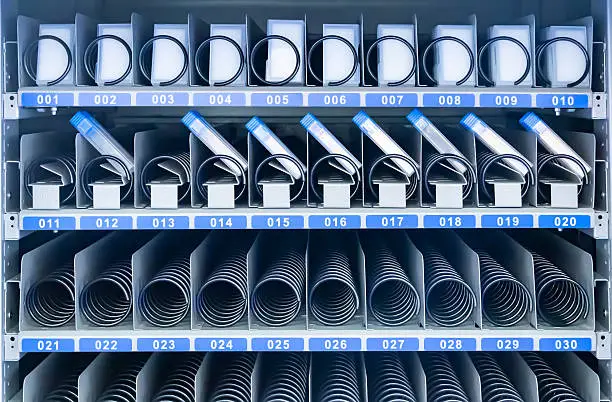
DIY Custom-Case Printers: They hold over 1,000 blank cases per refill. Ink systems typically support 2,000–2,500 printed cases per ink refill, often allowing quarterly replenishment. These machines store blank shells to cover dozens of phone models.
Compact Pre-Filled Accessory Vendors: Capacities range from about 50–100 units in modular carousels to 200–300 units in smart shelf kiosks. Hybrid models can hold 300+ units. They optimize for high product density in small footprints, selling finished cases and accessories.
Compact Custom-Print Kiosks: They store blank shells, much like larger DIY printers, covering numerous phone models from one inventory set. Their capacity is lower than full-size units. However, it still supports multi-day operation in moderate-traffic sites before needing restocking.
Customization capability
DIY Custom-Case Printers: Full customization is their main feature. They include on-screen design tools for uploading photos, social media images, or artwork. They also offer template libraries and live previews. These machines support personal photos and pop-culture designs across many phone types.
Compact Pre-Filled Accessory Vendors: Customization on-site is limited or non-existent. These kiosks sell pre-produced or only limited custom designs. Buyers choose from a fixed selection. Any customization happens before stocking the machine.
Compact Custom-Print Kiosks: These maintain the core customization experience of larger printers. Users upload personal images, choose templates, and preview designs on screen. They balance deep customization with a very small physical footprint.
How to Choose for Australian Locations
Selecting the right phone case vending machine in Australia requires matching machine type and placement to city size and foot traffic. Micro-location quality drives revenue.
| Feature | DIY Custom‑Case Printers (WM880‑class) | Compact Pre‑Filled Vendors | Compact Custom‑Print Kiosks |
|---|---|---|---|
| Print speed | 1–3 min print time, ~4 min full flow | No printing, instant dispense post‑payment | ≈4 min full custom cycle |
| Storage – cases | 1,000+ blank cases per refill | ~50–100 (carousel) to 300+ (hybrid) | Moderate blank‑shell capacity in compact form |
| Storage – ink / prints | 2,000–2,500 cases per ink refill | Not applicable | Lower than large printers, still multi‑day usage |
| Inventory model | Blank shells cover many phone models | Finished cases + accessories by model/style | Blank shells; multi‑model coverage |
| Customization capability | Full on‑site customisation; upload photos, templates, live preview | No real‑time customisation; pre‑made or limited custom stock only | Full on‑site customisation in compact footprint |
| Primary value proposition | Personalisation + high margin custom cases | Convenience + speed for replacements | Personalisation + space efficiency |
Based on city size
- Major Cities (Sydney, Melbourne, Brisbane, Perth): These areas have high population density, strong foot traffic, and extensive retail infrastructure. Consumers expect self-service.
- Machine Choices for Major Cities: Compact custom-case printing kiosks or hybrid multi-product kiosks work best. Deploy them in large malls (e.g., Westfield), tourist pedestrian malls (e.g., Pitt St Mall), airport concourses, and major train interchanges.
- Revenue Potential (Major Cities): Top locations can generate AU$1,800–AU$6,700 gross revenue per month. Well-placed custom-print machines often achieve AU$1,500–$3,500+ monthly.
- Mid-Tier Cities & Large Regional Centres (Adelaide, Gold Coast, Canberra): These cities feature moderate to high foot traffic in specific centers and strong tourism demand (e.g., Gold Coast).
- Machine Choices for Mid-Tier Cities: Custom-print kiosks suit souvenir-style cases in tourist-rich zones (e.g., Rundle Mall in Adelaide, major Gold Coast malls). Pre-filled accessory vendors perform well in supermarkets, discount stores, and mid-size malls.
- Revenue Potential (Mid-Tier Cities): Machines in major shopping centers, tourist precincts, and university campuses can aim for AU$1,500–$3,500+ per month.
- Small Cities, Outer Suburbs, & Regional Towns: These locations have lower overall population and foot traffic, with higher price sensitivity.
- Machine Choices for Small Cities: Entry-level pre-filled accessory vendors (USD $2,500–$5,000) or compact towers are most appropriate due to lower machine cost and simpler maintenance. Custom-print kiosks work only in areas with known clusters of young adults, students, or tourists (e.g., regional university).
- Performance (Small Cities): Realistic monthly targets are typically at the lower end of the AU$1,500–$3,500+ per machine range. Pre-filled machines are better if daily visitor numbers are significantly below 5,000.
Based on foot traffic
- High-Footfall Micro-Locations (5,000+ daily passers): Find these in food courts, travelator approaches, main entries, supermarket anchors, cinema zones in major malls, CBD pedestrian malls (Pitt St Mall), and major transit hubs.
- Machine Choices for High Footfall: Custom-print kiosks or hybrid multi-product kiosks are recommended. They handle high sales volumes and justify higher machine costs, capitalizing on strong impulse behavior. Multi-product kiosks with 300+ unit capacity maximize revenue per square metre.
- Target Metrics (High Footfall): Aim for 500–1,500 case sales per month for custom-print units, with gross revenue of AU$1,800–AU$6,700+ per month. High profit margins (73–88% per case) support rapid 5–8 month ROI for AU$12,000–AU$18,000 machines.
- Medium-Footfall Micro-Locations (2,000–5,000 daily passers): These include mid-size shopping centres, suburban malls, busy supermarket entrances, universities, and TAFEs.
- Machine Choices for Medium Footfall: A mix of pre-filled accessory vendors and compact custom-print kiosks works well. Use custom-print units where demographics skew young; use pre-filled units for price-sensitive areas needing replacement cases.
- Target Metrics (Medium Footfall): Expect monthly revenues around AU$1,500–$3,500 per machine. Placement is critical: position them near phone repair kiosks, JB Hi-Fi, and telco stores; avoid dead zones.
- Low-Footfall Micro-Locations (<2,000 daily passers): This covers small community centres, inner corridors, quiet office floors, and local shops without anchor tenants.
- Machine Choices for Low Footfall: Entry-level pre-filled accessory machines are best due to their low acquisition cost, simple maintenance, and modest inventory requirements. Avoid high-end custom-print or large hybrid kiosks here.
- Operational Implications (Low Footfall): Monthly revenue may fall below typical targets. These locations work best as supplementary sites or where hosting costs are exceptionally low. Continuous remote monitoring is essential to find and fix underperformance.
Final Thoughts
While entry-level vendors offer a lower upfront cost, true profitability in Australia's high-traffic zones demands strategic machine selection. Investing in custom-print kiosks or high-capacity models for prime micro-locations delivers superior margins and rapid ROI. Your success hinges on matching machine capability to site potential, avoiding underperformance from mismatched deployments.
Ready to map out your winning vending strategy for the Australian market? We recommend a tailored consultation to refine your location strategy and machine selection. Connect with our team to explore options and secure your competitive edge.