Is Phone Case Printing Profitable in USA
Phone Case Printing Profitable USA: Discover high margins & rapid ROI for B2B ventures. Explore scalable operations and ...

I'm the COO of GOBEAR. We help entrepreneurs, mall operators, 3C mobile stores, event venues, and campus retailers tap into high-margin, low-maintenance vending models.
If you’re wondering how long does phone case vending machine shipping take to USA, the difference between a 10-day air freight window and a 12-week sea freight delay can mean $10,000+ in lost revenue before your machine even turns on. Every extra day in transit or customs limbo not only delays your income but also risks missing a mall launch, holiday retail window, or peak campus season—turning a well-planned investment into a costly scheduling failure.
This analysis benchmarks real timelines—from stock machine dispatch to final door-to-door delivery—using verified factory schedules and freight lane data. We evaluate production lead times (3–7 days in-stock versus 30–35 days custom builds) and transit modes (air in 2–5 days versus ocean at 6–10 weeks) to help you lock in a deployment date that protects your revenue start—and spares you from the most common purchase-to-launch pitfalls.
Delivery spans 10 days to 12 weeks. In-stock machines via air freight hit the low end. Custom OEM builds via sea freight define the high end.
| Scenario | Production Window | Transit Time | Total Door-to-Door |
|---|---|---|---|
| Stock + Air Express | 3–7 days | 7–14 days | ~10–21 days |
| Standard + Air Freight | 7–14 days | 7–14 days | ~2–4 weeks |
| Custom OEM + Air | 2–4 weeks | 1–2 weeks | ~3–6 weeks |
| Bulk + Sea (West Coast) | 2–4 weeks | 4–6 weeks | ~6–10 weeks |
| Bulk + Sea (East Coast) | 2–4 weeks | 5–8 weeks | ~7–12 weeks |
How long a phone case vending machine sits in production before it leaves the vending machine factory depends almost entirely on two things: whether the unit is already built, and how much customization you need. Stock machines move fast. Custom OEM configurations take real time.
If you need a machine fast, ask the supplier point-blank: "Is this unit in stock right now?" A yes means 3–7 days to ship. A no—especially with customization—means at least 2–4 weeks before the crate leaves the dock.
Once the machine leaves the factory, transit mode determines the rest of the timeline. Air freight gets units to US locations in days. Sea freight takes weeks but costs far less per unit. Your choice here directly shapes your revenue start date.
For a first pilot machine, most operators run air freight and plan for 2–4 weeks door-to-door. The math is simple: a unit generating $450–$1,000 per day in a busy mall recovers the extra air freight premium in under a week of early operation.
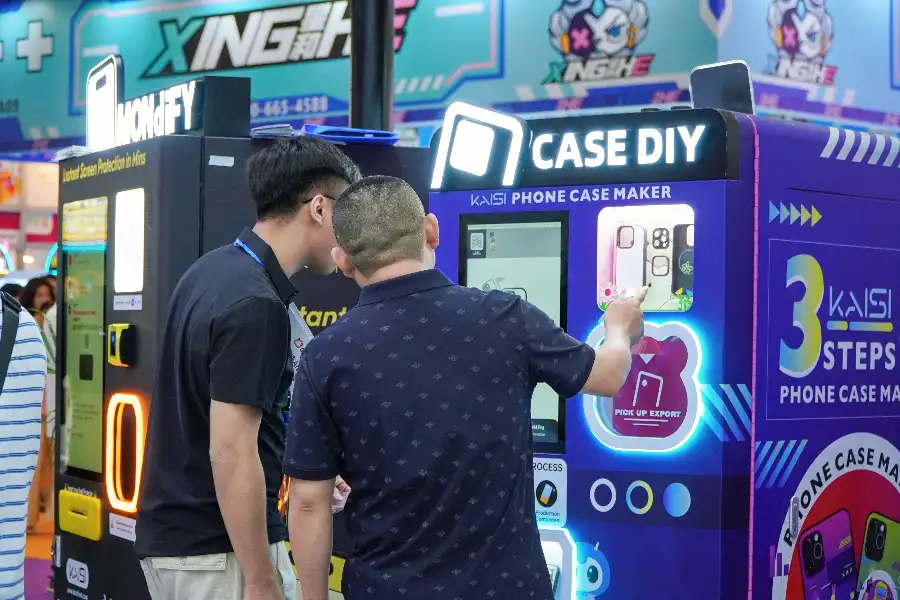
In-stock machines ship in about 7 days. Custom or non-stock builds typically require 30–35 days from model confirmation to delivery.
For standard phone case vending machines, two clear paths exist: in-stock units leave the factory in about 7 days. Anything not sitting on a shelf follows a predictable 30–35 day cycle from final spec lock-in to handing the shipment to the forwarder.
The schedule breaks down into three tight windows. Specification finalization and order confirmation eat up the first 0–3 days. Manufacturing and assembly consume days 3 through 25. Final testing, export packing, and shipment processing close out days 25–35. This cadence covers everything up to delivery at the forwarder’s dock; actual transit to a U.S. site depends on the freight mode you choose.
Customized machines land squarely on the 30–35 day timeline. The clock starts only after you and the supplier lock down the exact model, configuration, price, and deposit. Any deviation in hardware, branding, software, or accessory integration lengthens the path.
The schedule’s rhythm changes because it now rides on component availability, engineering sign-offs, factory slot allocation, and QC testing cycles. Practical planning splits the process into three phases: 1–2 weeks to confirm requirements and process the order, 2–3 weeks for fabrication and assembly, and several days for testing, packing, and outbound shipping coordination. If your customization includes special UI packs, payment stack integration, or unique cabinet finishes, factor in an extra buffer beyond the baseline.
For a reliable deployment in the U.S., get written confirmation on stock status, build completion date, shipping method, tracking issuance, and customs document readiness. These checks prevent production schedules from sliding into unknown territory.
West Coast shipments from China take 13–20 days on the water, East Coast 30–35 days; door-to-door timelines include up to 2 weeks of handling.
The Pacific route from Shanghai to Los Angeles/Long Beach is the fastest ocean connection. Vessels typically spend 13–20 days at sea, and port-to-port shipments land in 2–3 weeks.
Door-to-door shipping, including origin handling and final inland delivery, usually requires 3–4 weeks. For phone case vending machine restocking, plan on 3–4 weeks total and book vessel space 2–4 weeks ahead. Direct routing makes West Coast delivery the most predictable choice from Asian manufacturing hubs.
East Coast deliveries take longer because vessels must pass through the Panama Canal or Suez Canal. Typical sea transit is 30–35 days, and the full door-to-door window commonly stretches to 4–6 weeks, including inland transport after discharge.
This route is more complex and sensitive to delays. Phone case vending machine inventory heading to East Coast locations should be planned with a 4–6 week lead time and reinforced with safety stock. Expect wider transit variability during peak shipping seasons, and add extra days for customs and last-mile moves.
Express air freight lands phone case vending machines at a US airport in 1–3 business days. Door-to-door, expect 2–5 days.
When you need a phone case vending machine on US soil fast, express air freight is the only mode that makes sense. Airport-to-airport transit from major manufacturing hubs in Asia or Europe clocks in at 1–3 business days. That is not a sales promise. It is what the major integrator networks actually deliver when documentation is clean and cargo space is available.
The door-to-door number matters more for planning. Express shipments typically run 2–5 days total. That covers factory pickup, origin handling, the flight itself, US customs clearance, and final-mile trucking to your site. Customs is usually the wildcard here, but with a pre-cleared broker and correct HS codes, clearance rarely exceeds a day or two on express lanes.
The dedicated integrators — DHL, FedEx, and UPS — own these timelines. They operate their own aircraft, ground fleets, and brokerage desks. For a crated machine weighing several hundred pounds, they remain the most reliable route. This is the service tier you choose when a high-traffic airport location goes down and every lost day means lost revenue. Or when a new mall kiosk has a hard launch date tied to a marketing campaign and the build ran long at the factory.
Express carries a steep cost premium over standard air freight, let alone ocean. No sugar-coating that. But the premium buys you speed that standard air (4–7 days door-to-door) cannot match. Operators testing the US market with one or two machines often run express on the first unit. The logic is simple: get revenue flowing, validate the location, and decide on bulk sea freight for the next batch once the model proves itself.
Paperwork mistakes and valuation disputes turn a 1–2 week customs clearance into a costly bottleneck. Precision in documentation is the fastest way to get your machine released.
Peak order backlogs and congested ports each add weeks to vending machine delivery. Plan for 6–10+ week timelines when either hits.
Standard factory lead times of 7–10 days don’t hold when the entire supply chain is overloaded. Pre‑holiday order backlogs routinely stretch production by 5–20+ days, especially ahead of Chinese New Year, the Q4 retail build‑up from August through November, and back‑to‑school demand in late summer. Suppliers race to ship before factory shutdowns or U.S. holiday import windows, so late orders simply sit in longer queues.
International transit feels the squeeze too. Ocean freight for West Coast delivery can drift toward 8 weeks when vessel space tightens and carriers bump containers. Even domestic trucking inside the U.S. climbs toward the high end of its 5‑day typical range because capacity is overbooked. The combined effect shifts the whole project from a manageable 3–6 weeks off‑peak to 6–10 weeks or more during peaks.
Buyers who align orders with critical installation dates get the best results. A 1–2 month buffer ahead of a mall launch or campus opening season absorbs most seasonal shocks. The buffer also covers consumables like blank cases and ink, which face the same import bottlenecks. Pushing an order early isn’t a cost; it’s insurance against missing the revenue window.
A phone case vending machine in a container is at the mercy of every touchpoint. Congestion can hit at the origin port in Shanghai or Shenzhen, at a transshipment hub if the route isn’t direct, or at major U.S. gateways like Los Angeles/Long Beach or New York/New Jersey. When vessels queue offshore and terminals fill up, dwell time jumps from days to over two weeks. That pushes the international leg from a typical 4–6 weeks West Coast window toward 8 weeks, and it thrashes domestic drayage schedules that normally clear in about 5 days.
The risk spikes when you lean on the highest‑volume ports and the cheapest economy freight. Containers on low‑cost contracts get rolled first, and major hubs don’t have slack during demand surges, labor disputes, or weather events. A global disruption just compounds it, turning a predictable 35–50 day total cycle into a 10‑week waiting game.
You can’t eliminate congestion, but you can route around it. Using alternative U.S. ports—even if inland trucking adds a couple of days—often beats sitting in an LA/LB anchorage queue. Premium ocean services or consolidating into air freight protect high‑value mall or airport placements where daily revenue loss is real. Other buyers sync production ready dates tightly with vessel booking windows so the machine doesn’t sit idle at the factory while a shipping slot evaporates. Adding 2–3 buffer weeks to the plan, especially during known peak months, turns potential chaos into a manageable schedule.
Speed delivery by using DDP to shift customs liability and stocking machines and parts locally to bypass ocean freight.
DDP puts customs, duties, and last-mile delivery squarely on the seller. That removes the coordination gaps and customs delays that typically hit first-time importers hard. The supplier handles export clearance, freight, import brokerage, and all duty payments, so you aren't waiting on a broker or arguing with CBP over HS codes.
Sellers offering DDP commit to fixed transit windows — usually 7–14 days by air or 6–8 weeks by sea. The paperwork is pre-cleared. Invoices, packing lists, and certificates are reviewed before the shipment leaves. That keeps the machine from sitting at a U.S. port while someone fixes a missing commercial invoice.
Demand a DDP quote to your exact ZIP code. Confirm it includes unloading and transit insurance. Align the timeline with peak seasons: for holiday retail, order by late August to install by November 1. Without DDP, a single documentation error can add 3–10+ days to your go-live date.
Machines sitting in U.S. or nearshore warehouses ship in 7–14 days. You skip the entire production queue and ocean transit. Ask the supplier how many units are in North American stock and get a door-to-door window. Standing orders and rolling forecasts keep your configuration on the shelf, ready to deploy within 1–3 weeks when you sign a new mall or airport contract.
Keeping 1–3 months of blank cases and ink in the country means you never pause sales waiting for a container. High-volume locations move 500–1,500 cases per month. A two-week stockout at those velocities costs thousands in lost margin. Domestic restock runs 2–5 days, not 2–4 weeks.
Stock a critical spares kit — payment modules, printheads, touch controllers — locally and partner with a U.S.-based service center. A failed card reader or UV lamp can sideline a machine for weeks if you ship parts from Asia. With in-country spares and a trained technician, you cut repair downtime to days and protect the speed-to-revenue you paid for upfront.
Choosing the cheapest freight or a supplier without proven export rhythm costs you far more than shipping — it steals $450–$1,000 in daily revenue for every day your machine sits idle. A machine built to your spec and delivered on a committed air or DDP sea schedule is the only defense against missed mall openings and empty kiosks.
Don’t gamble on delivery windows when your revenue clock is ticking. Start with a pilot unit under DDP air terms, validate your high‑traffic location in 2–4 weeks, and scale with confidence. Contact our logistics desk now to lock in a production slot and a door‑to‑door delivery guarantee.
Share your business vision with us. Our automated retail experts will craft a tailored strategy and a comprehensive profitability report to unlock your next revenue stream.