What Phone Accessories Sell Best in Australia
Discover top categories and high-margin phone products that sells best in Australia. Ideal for wholesale, dealers, and p...

I'm the COO of GOBEAR. We help entrepreneurs, mall operators, 3C mobile stores, event venues, and campus retailers tap into high-margin, low-maintenance vending models.
The answer directly impacts your operational legitimacy and financial stability. Navigating the fragmented federal, state, and local licensing landscape without clarity creates compliance risks and can lead to significant fines or business closure.
This analysis evaluates critical regulatory frameworks, including federal compliance points, diverse state and local permitting, and sales tax obligations. We identify mandatory registrations and approximate initial costs, typically a few hundred dollars, ensuring you establish a legally sound and scalable vending operation.
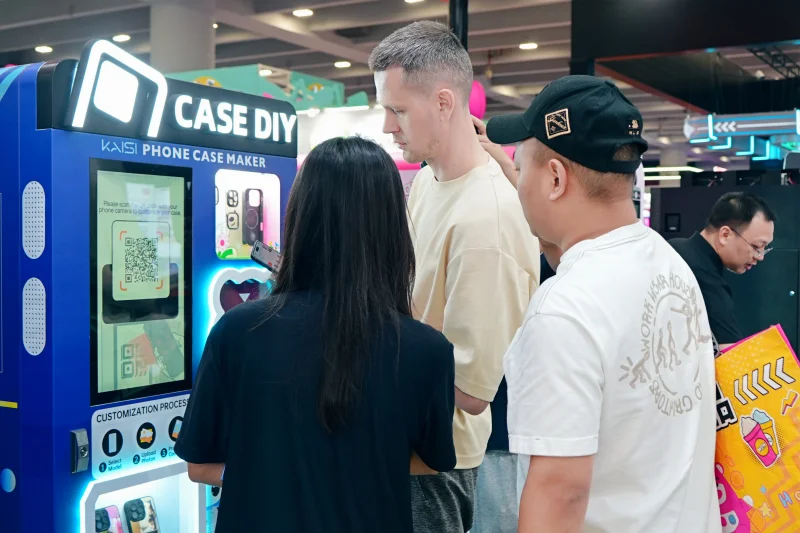
Operating vending machines in the USA requires navigating federal, state, and local rules covering licensing, health, product specifics, and placement. Expect various permits, not a single national one.
Operating vending machines in the USA means dealing with several layers of rules. These range from federal mandates to local permits. You must understand how these frameworks apply to your business.
Getting your vending business licensed is a multi-step process. Once you have licenses, you must keep them current and follow all rules consistently.
Federal regulations for vending machines focus on specific areas like labeling, accessibility, and tax ID, not a general operating license. State and local rules are usually more involved.
Operators deal with a few key federal areas. These are not about a general permit, but about specific compliance points.
Forget about a single federal vending license. It just doesn't exist.
Running vending machines in the USA means navigating diverse state and local rules. Operators face licensing, tax, and health requirements that vary by jurisdiction and product type.
Operating vending machines in the USA involves several layers of state and local rules. These regulations cover the basic business setup, how you handle money, and what you sell.
Here are the main areas where state and local governments impose requirements:
Dealing with vending machine regulations means following a clear process. Here is how operators typically handle compliance at state and local levels:
Setting up your vending business right means choosing the best legal structure. This protects your assets and simplifies growth, taxes, and multi-state operations.
A Sole Proprietorship operates under the owner’s personal legal identity. It's simple to start, but offers no personal liability protection. Business debts or lawsuits can affect personal assets.
A Limited Liability Company (LLC) is the most common form for small vending operators. It creates a separate legal entity providing limited liability, shielding personal assets from business debts and claims. This structure offers flexible taxation and industry experts frequently recommend it.
A Corporation (C-Corp or S-Corp) involves a more complex setup and compliance. It suits larger, multi-state operations or businesses seeking investors. This structure provides strong liability protection and clear separation from owners.
A Partnership (General or Limited) is used when multiple individuals jointly own the vending route. Operators often combine it with an LLC to add liability protection and define partner rights through an operating agreement.
Vending machines operate on third-party properties and are publicly accessible. Many operators prioritize LLC or corporate structures to limit personal exposure to claims, addressing liability and risk head-on.
Operators planning to scale from a few machines to a large route benefit from forming an LLC or corporation early. This avoids complex restructuring down the line, supporting their growth expectations.
If machines operate in multiple states, the chosen entity must comply with each state’s sales tax registration, foreign entity registration (if formed elsewhere), and local business license rules. This is important for multi-jurisdiction operations.
Setting up bookkeeping and separate business bank accounts early simplifies sales tax remittance and income tax preparation for all applicable jurisdictions. This makes tax management much easier.
Operating vending machines in the USA means you will deal with sales tax and permits. These rules vary by state and city, covering business registration, sales tax collection, and product-specific health approvals.
Operating vending machines in the USA means you usually need licenses and permits. This applies especially when you sell food or other taxable goods. While there is no single federal vending license, federal rules do impact areas like nutrition labeling for large operators. Most of your licensing will be state and local.
You typically need a few types of approvals:
Operating without these licenses can lead to fines or even business closure. Before you place any machines, confirm these requirements in each state and city where you plan to operate.
Sales tax is a major compliance area for vending operators. In most states, vending machine sales are retail transactions, so they are subject to sales tax. The operator who stocks the machine and collects money acts as the retailer. This means you must register, collect, report, and pay sales tax.
Good operational practices are key. You need to identify obligations in each location, register before putting machines out, track machine locations and sales, price items intelligently to include tax, keep detailed records, and file returns on time. Staying on top of tax law changes, like Florida's 10-cent rule or California's 15-cent threshold, protects your business.
Property owner agreements establish permission to operate vending machines on private land, clarifying ownership, allocating risk, and defining financial terms.
A property owner agreement acts as a written contract between the vending machine operator and the property owner. It grants legal permission to install, operate, and maintain vending equipment on the owner’s premises. This agreement clarifies who owns the machines and inventory (the operator) versus the premises (the property owner).
These agreements also allocate risk, liability, and responsibilities for maintenance, damage, theft, injury, and legal compliance. They define financial terms, such as rent or revenue share for the property owner. Crucially, they set rules for duration, renewal, and termination, outlining what happens to machines at the end of the agreement.
The agreement grants the operator the right to install specific types and quantities of vending machines in a defined area. This often includes exact placement details, like "east wall of employee break room." Operators gain access during business hours or other agreed times for restocking, maintenance, and collections.
Many agreements include an exclusivity clause. The property owner agrees not to allow competing vending machines with similar products within a specified radius. This protects the operator's sales and revenue.
Agreements often specify a 12-month initial term, with automatic renewal for successive periods unless one party gives written notice. They define grounds for termination, like breach of contract or service failures. Written notice is standard before removal or termination, which helps operators manage logistics.
Financial terms clearly outline property owner compensation. Payment models include a fixed monthly fee (rent/lease) or a revenue share (percentage of gross sales, often 5–25%). Operators also need clarity on utility costs, specifically how they compensate the property owner for electricity, which powers continuous machine operation.
Property owner agreements assign specific operational duties. Operators handle installation, setup, restocking, and product management. They ensure machines remain in good working order through routine maintenance and repairs. Operators also keep machines clean and presentable, following local laws and regulations, such as health standards and accessibility requirements.
Property owners provide the space, access, and utility connections, like power outlets. They allow reasonable access for operator staff. Property owners maintain general premises security, but specific liability for machine-related damage or theft usually follows the contract terms. Agreements may also prevent property owners from moving machines without operator consent.
Operators must comply with government licensing rules. Most jurisdictions require a business license, a vending machine permit (city/state), and sales tax permits. If machines sell food or beverages, local health department approval, inspections, and food handling certifications are necessary.
Operators also need commercial liability insurance, often with minimum coverage of $1,000,000 per occurrence. Property owners may request to be listed as an additional insured. Contracts detail responsibility for damage to machines, theft, or injury caused by the machines. Operators typically assume this responsibility, holding the property owner harmless unless their negligence caused the incident.

Vending machine insurance isn't federally mandated, but state laws and contracts often require it. Costs typically range from 2-5% of gross revenue.
No federal law specifically mandates vending-specific insurance. Requirements primarily come from state laws and contractual agreements.
State laws typically mandate Workers' Compensation for businesses with employees, along with Commercial Auto insurance for service vehicles.
Location contracts frequently require General Liability insurance. These often include $1 million per occurrence limits and list property owners as additional insureds.
Core insurance types you should consider are:
General Liability protects against bodily injury and property damage. Typical limits are $1,000,000 per occurrence and $2,000,000 aggregate.
Property insurance covers physical machines, inventory, and storage facilities against risks like fire, theft, and vandalism.
Equipment Breakdown coverage handles mechanical or electrical failures within your vending machines.
Commercial Auto insurance covers vehicles for route servicing, inventory delivery, and machine transportation.
Workers' Compensation provides statutory benefits for employee work-related injuries or illnesses.
Crime, Theft, and Vandalism coverage protects against cash theft from machines or in transit, and damage from vandalism.
Cyber Liability addresses risks tied to card readers, digital payments, and potential data breaches, which is crucial for cashless operations.
Business Interruption insurance replaces lost income when operations stop due to a covered property event.
Umbrella/Excess Liability offers additional liability limits beyond primary general liability and commercial auto policies for significant claims.
Common exclusions can apply to specific product types, like tobacco or hot beverages, outdoor machine placements, or certain equipment such as ATMs or photo booths.
Offsite and multi-state operations need compliance with varying state laws and policies that cover all relevant locations.
Annual insurance costs for vending businesses commonly run $500–$2,000, typically 2–5% of gross revenue.
Premiums are influenced by:
A strategic approach maps all business risks, including machine locations, vehicles, cash handling procedures, and digital payment systems.
A standard coverage package should include:
Implementing operational best practices, such as using high-security locks, properly securing machines to prevent tipping, regular maintenance, and increasing cashless payment options, reduces risk exposure and potentially lowers premiums.
Insurance procurement involves preparing detailed business data like revenue, machines, and payroll, getting quotes from multiple insurers (at least three), prioritizing carriers or brokers with vending industry experience, and giving Certificates of Insurance (COIs) to clients.
Annual review and updates of insurance policies are crucial to align with business growth, technology changes, and evolving risk profiles.
You must integrate insurance costs into pricing strategies and location profitability analyses. This ensures the financial viability of each vending operation.
Higher-risk locations or vending specialized products may need adjusted premiums or specific endorsements. This impacts net profit margins.
An actionable checklist for operators includes determining legal requirements, securing core and risk-specific coverage, aligning with client contractual needs, and continuously integrating insurance costs into financial planning.
New vending operators must secure business registration, sales tax permits, local licenses, and health approvals. Ongoing compliance involves sanitation, recordkeeping, and timely renewals.
| Permit / approval type | Typical trigger | Examples from state guidance |
|---|---|---|
| Seller’s permit / sales tax permit | Vending sales of taxable goods | California generally requires one seller’s permit for vending machine sales. |
| Business license | Operating a vending business in a state or locality | Alabama requires a business privilege license; some local jurisdictions also require local business licenses. |
| Food / health permit | Perishable, prepared, or otherwise regulated food and beverage vending | Massachusetts and Florida require vending-machine-specific licensing and inspections for food/beverage machines. |
| Occupation / machine tax permit | Some machine types or jurisdictions | Texas requires visible occupation tax permits on coin-operated amusement machines. |
| Site/location approval | Machine placement in a specific city, county, or facility | California and other jurisdictions may require city/county approval and inspection tied to the machine’s operating location. |
There is no single federal “vending machine license” for operating vending machines in the USA. Federal government imposes business, tax, disability access (ADA), and food labeling (FDA) requirements, but these are not licenses. Licensing is primarily handled at the state and local level, meaning operators combine multiple state and local permits instead of obtaining one federal license. For example, federal involvement includes securing an Employer Identification Number (EIN) for tax purposes, complying with ADA accessibility rules for machine placement, and adhering to FDA food regulations for products sold.
Yes, states in the USA do have different vending machine regulations, and compliance depends on the specific state and sometimes the city or county where machines operate. Key regulatory areas like business registration, sales tax permits, vending operator licenses, health permits, and local zoning vary significantly by state. This includes diverse sales tax treatments, product price thresholds, health code compliance (especially for perishable foods), machine registration/labeling requirements, and specific rules for locations like schools or product types such as bottled water. Operations spanning multiple states must verify the unique requirements of each jurisdiction.
You do not legally need an LLC to operate a vending machine in the USA. Forming an LLC is strongly recommended for personal liability protection, tax flexibility, and business growth. Operators can start as sole proprietors. An LLC separates personal and business assets, enhances professional credibility for securing location agreements, simplifies banking and insurance processes, and facilitates scalability. An LLC does not replace other compliance obligations, such as obtaining business licenses, sales tax permits, health permits, or ensuring ADA compliance. It is particularly advisable for expanding routes, high-traffic locations, formal contracts, hiring employees, or building business credit.
Vending machine operators in the USA almost always need a sales tax permit / seller’s permit because vending sales are treated as retail sales subject to state and local sales tax in most jurisdictions. The vending operator, acting as the retailer, is responsible for collecting and remitting sales tax. Most states issue one sales tax permit covering all machines under the same operator, though some states might require additional local registrations. Exemptions are typically narrow (e.g., for very low-priced items or certain nonprofit sales). This permit is distinct from general business licenses or health permits, and operators usually embed sales tax in product prices, tracking taxable versus exempt items, and filing returns periodically.
Yes, shopping malls often require additional agreements beyond any state or city vending license when you place a vending machine there. As private property, malls mandate property owner permission, typically through a location agreement or a lease to occupy space. These agreements usually involve a revenue share or rent arrangement. Mall management also commonly requires commercial liability insurance, often requesting to be named as an additional insured. While vending licenses regulate the business activity, mall agreements govern the physical placement and commercial use of the private space within the mall.
Non-food vending machines generally require fewer permits than food vending machines, but they are not permit-free. In most U.S. states, core requirements include business registration and a sales tax permit/seller’s permit if the items sold are taxable. Food vending triggers health department permits and inspections due to food safety laws, which non-food vending typically avoids. Non-food machines still need a general business setup (entity registration, EIN, tax registration), a sales tax permit for taxable items, and potentially location-specific approvals or zoning permits, depending on the state and locality.
Vending machine operators in the USA typically need a bundle of commercial insurance policies tailored to their risk profile, fleet size, and locations. Core coverages include: General Liability Insurance (protects against bodily injury and property damage, often required by host locations), Product Liability Insurance (for claims related to dispensed products, especially food/beverages), Property/Vending Machine Equipment Insurance (covers theft, vandalism, and damage to machines and inventory), Commercial Auto Insurance (for service vehicles), and Workers' Compensation Insurance (mandatory in most states when employees are hired). Other important policies to consider are a Business Owner’s Policy (BOP, combining GL and property), Commercial Crime Insurance (for cash/inventory theft), Cyber Liability Insurance (for card readers), and Umbrella/Excess Liability Insurance for higher limits.
A vending machine can usually be placed on private property only with the property owner’s permission, typically through a written location agreement. Securing private property permission does not automatically eliminate licensing, tax, zoning, or health requirements. The machine's operation remains a business activity subject to general business licenses, an EIN, sales tax registration, and potentially health permits (if selling food or beverages) or zoning approval, depending on the state, city, and product type. Public property usually has different permit requirements than private land.
Health permits in the United States generally tie to food and beverage vending and other public health risks, not to non-food products like phone cases. Phone case vending machines typically do not require a health permit. Health department oversight focuses on food safety, temperature control, and contamination for consumables. Phone cases are non-food items, so they fall outside health department jurisdiction. Phone case vending machines still need general business licenses, sales tax permits (if cases are taxable), vending-specific registrations, zoning approvals, and ADA compliance, similar to other non-food vending operations.
Vending machine businesses in the USA face several tax categories: sales tax, income tax (federal and state), self-employment/payroll tax, and property & equipment-related taxes. Sales tax is collected by the operator (as a retailer) on taxable items sold. Use tax may apply to out-of-state equipment purchases. Federal and state income taxes apply to net profits, with deductions for expenses and depreciation (including Section 179 expensing for machines). Self-employment tax covers social security/medicare for individual owners, and payroll taxes apply if employees are hired. Additionally, local jurisdictions may levy business personal property tax on the vending machines themselves. Specific rules vary by state and locality, but this core framework is consistent nationwide.
Yes, foreigners can own vending machines in the USA in many cases, but ownership alone does not remove the need to comply with U.S. business, tax, licensing, and local operating rules. There is no general federal rule prohibiting foreign ownership. The critical step is establishing a U.S.-compliant business structure (such as an LLC or corporation), obtaining a federal Employer Identification Number (EIN), registering for state and local business licenses and sales tax permits, and securing any necessary health permits and location agreements. Compliance focuses on the business entity and its operations within the U.S. legal and regulatory framework, rather than the nationality of the owner.
To register a vending machine business in the USA, you typically must form a legal business entity (an LLC or corporation is often recommended), obtain a federal Employer Identification Number (EIN) from the IRS, and open a dedicated business bank account. You then register for a state sales tax permit (seller’s permit) and secure local general business licenses from your city and/or county. Depending on your products and locations, you might also need vending-specific permits, health permits (for regulated food/beverages), and ensure ADA and zoning compliance. Lastly, purchase general liability insurance and draft written placement agreements with property owners. Ongoing compliance involves timely renewals and diligent recordkeeping.
Scaling a profitable vending business in the USA demands more than just machines; it requires meticulous compliance and a solid business structure. Neglecting these essential regulatory layers leads to significant fines, legal risks, and operational stagnation.
Don't navigate this complex regulatory landscape alone. We recommend a strategic review to adapt this operational blueprint to your specific locations and business goals. Reach out to our team to discuss your tailored compliance and scaling roadmap.
Share your business vision with us. Our automated retail experts will craft a tailored strategy and a comprehensive profitability report to unlock your next revenue stream.