Boost Custom Phone Case Vending Machine Sales - GOBEAR
Boost custom phone case vending machine sales with proven tips to attract customers, maximize profits, and grow your ret...

I'm the COO of GOBEAR. We help entrepreneurs, mall operators, 3C mobile stores, event venues, and campus retailers tap into high-margin, low-maintenance vending models.
Traditional vending relies on selling hundreds of cheap snacks just to cover rent. A phone case vending machine business flips this model, selling premium, personalized products with high profit margins. But why is this specific model taking off in Australia right now?
The answer lies in the unique economic landscape. Australia has some of the highest labour costs in the world, making staff-free automated retail incredibly competitive. Combined with a population that is overwhelmingly cashless and eager for instant customization, the Australian market is primed for high-end DIY phone case printing machines.
This guide ignores the fluff and focuses on the hard facts you need to launch here. We cover everything from navigating shopping centre leases versus council permits, breaking down real startup costs, to choosing high-performance hardware that ensures a fast return on investment.
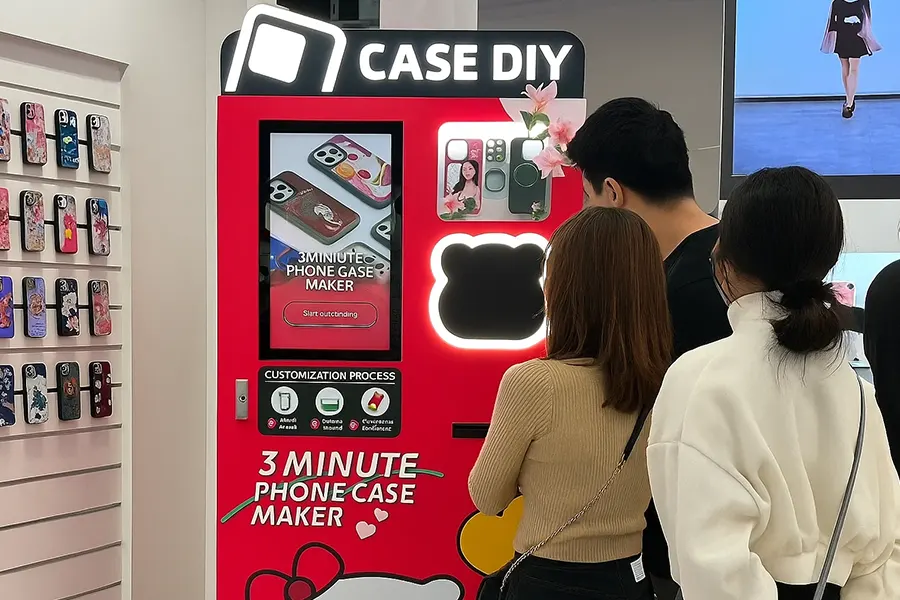
The Australian retail sector is undergoing a massive shift. Rising commercial rents and wages are pushing businesses toward compact, automated solutions. Vending machines have moved beyond $2 soft drinks to become high-yield retail channels for premium goods.
Here is why the phone case niche is outperforming traditional vending in Australia right now:
Tech-Savvy Population: Australians are global early adopters of new technology. They adapt quickly to self-service kiosks and expect digital interfaces in their shopping journey.
Global Leaders in Contactless Payments: According to the Reserve Bank of Australia (RBA), cash usage for in-person transactions has plummeted. Australians are habituated to "tap-and-go" payments, meaning modern machines that accept cards and mobile wallets fit perfectly into daily habits.
High Demand for Personalization: Australians have high disposable income and value individuality, often preferring unique items over standard, off-the-shelf products. However, they dislike the long shipping times associated with online customization. Your machine offers instant gratification, allowing customers to design and print a custom case in minutes. This premium experience justifies a higher price point, directly driving superior profit margins.
Several key factors align perfectly with the automated retail model in 2026, making your phone case vending machine business a true passive income generator.
Since the vast majority of Australian consumers prefer digital wallets and cards, managing a vending business is streamlined. You avoid the heavy lifting of handling cash, counting coins, or dealing with jams. More importantly, this fully automates your accounting. Every transaction is tracked digitally in real-time, allowing you to reconcile your weekly earnings from your laptop without ever needing to visit a bank.
Australia has one of the highest smartphone ownership rates globally. This means your customers are already experts at using touchscreens and scanning QR codes. Because customers are self-sufficient, you don't need to hire staff to explain how the machine works. Crucially, because the customer designs the product themselves, you eliminate the risk of "wrong orders." They are responsible for the final look, significantly reducing refund requests and customer service headaches.
This business model allows you to bypass the two biggest expenses in Australian business: staff wages and shop fit-outs. Compare this to a standard retail kiosk: you aren't paying $50,000 for a permanent renovation or wages for staff to stand around during quiet hours. Your rental footprint is only 1-2 square meters, and with print-on-demand technology, you never lose money on "dead stock" designs that go out of fashion.
Because your overheads are stripped to the bone, your break-even point is much lower than a franchise or physical store. But the biggest advantage is asset mobility. Unlike a brick-and-mortar store, if a location underperforms, you simply unplug the machine and move it to a better spot. This mobility protects your capital and ensures your investment is always working at maximum capacity.
Our AI-powered machines print premium, custom phone cases in about 120 seconds. With a robust cloud platform, no monthly software fees, and a 3-year warranty, they offer a simple, high-margin business for malls, airports, and retail chains. Calculate your potential payback in as little as one month.
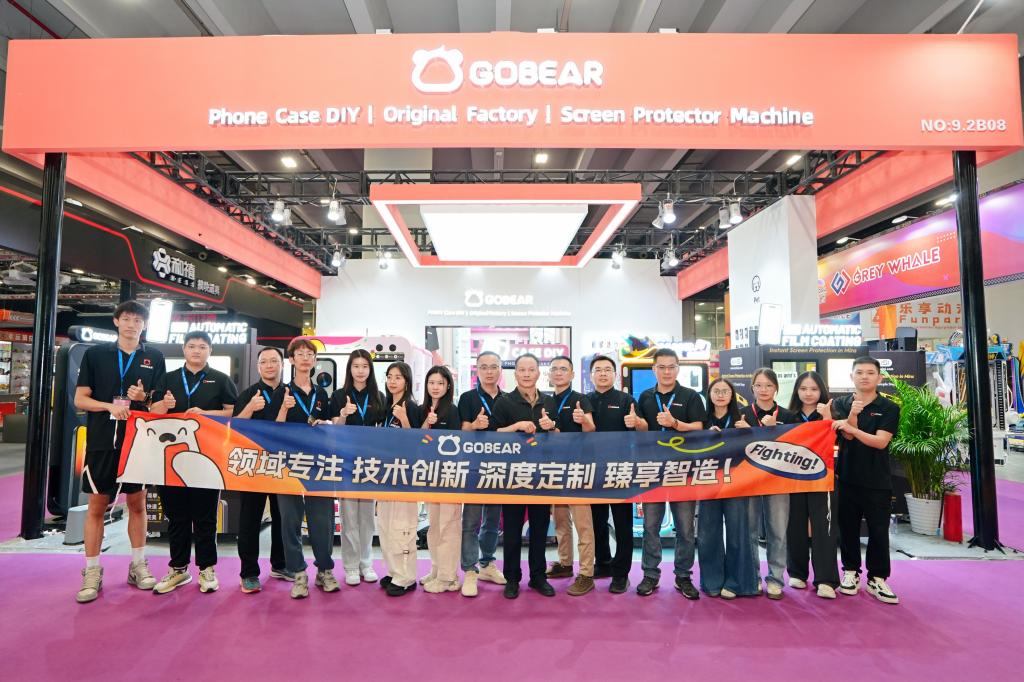
Starting a phone case vending machine business in Australia requires federal compliance and securing the right location agreement. It is critical to distinguish between public land and private retail spaces, as the approval process differs completely.
Before you place your first machine, you need to set up your business correctly at the national level.
Australian Business Number (ABN): This is a non-negotiable first step. Every business in Australia needs an ABN for tax and identification purposes.
Public Liability Insurance: Whether you are in a park or a mall, this is essential. It protects your business from claims if someone is injured by your machine. Most location owners will require a Certificate of Currency with minimum $10 million or $20 million coverage before you can install.
This is where 90% of phone case vending machines operate due to high foot traffic and security. You do not need a council permit for these. Instead, you need to negotiate a Lease or License Agreement with Centre Management. This applies to major groups like Westfield and Vicinity as well as independent mall owners. They will care about your machine’s aesthetics, dimensions, and power requirements.
If you plan to place your machine on a street footpath, public park, or transport hub, you must apply for a permit from the Local City Council. Regulations vary strictly by council:
Victoria: Some councils require specific "Footpath Trading Permits."
NSW & Queensland: Focus heavily on pedestrian obstruction rules.
Note: Public street placement is harder to secure for high-tech electronics due to weather and vandalism risks.
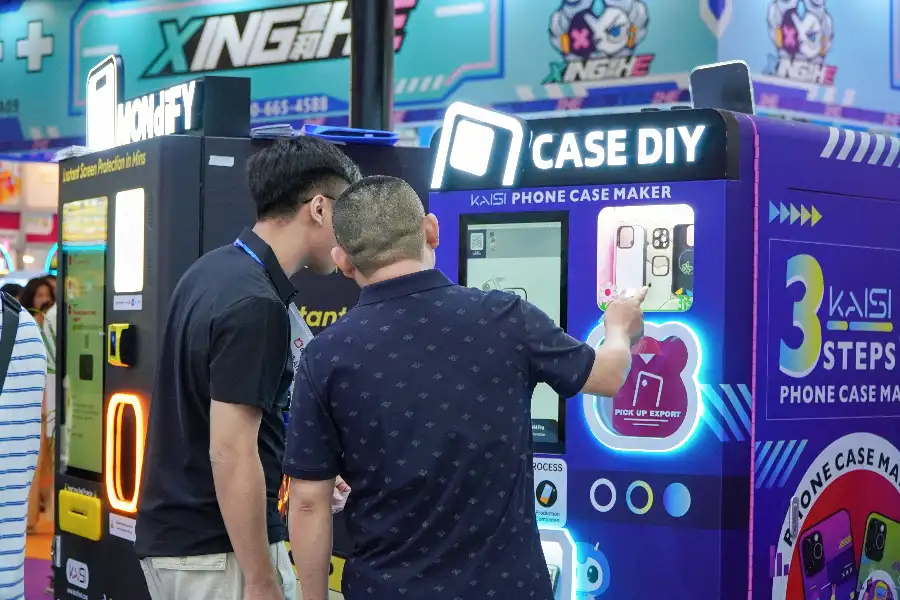
Choosing the right hardware is critical. In 2026, the machine’s interface matters as much as the product. A customer willing to spend $35 on a case needs an engaging, frustration-free touchscreen to design it.
To succeed, your DIY phone case printing machine needs to meet these standards:
Capacity: Look for a machine that holds between 600 and 800 phone cases. A larger capacity reduces restocking frequency.
Dimensions: A typical machine is about 1.3m width x 0.9m depth x 2.4m height. Always check the elevator and door height of your delivery location.
Weight: These machines weigh between 230-320kg. Ensure your location has a stable, level surface.
The core of a successful business is the quality of the output. A high-end DIY phone case printing machine must use industrial-grade UV technology.
Printing System: Insist on advanced print heads like the EPSON I1600-U1. This ensures the machine produces sharp, vibrant, and durable designs that justify the premium price point.
User Interface: A large, responsive touchscreen is non-negotiable. Most premium models feature a 27 to 32-inch display, making it easy for customers to use AI design tools and upload photos.
Connectivity: Your machine needs a stable internet connection for payment processing and remote monitoring. Ensure it has an industrial 4G/5G modem compatible with major Australian networks like Telstra, Optus, or Vodafone.
Power Needs: Operating power consumption is usually between 400-440W. Ensure the machine is compatible with standard Australian 240V outlets using a 10A plug.
Warranty: While a one-year warranty is common, look for suppliers who provide a 3-year warranty to secure your investment.
Starting a phone case vending machine business in 2026 typically requires an initial investment between $5,500 and $15,000 AUD, depending on the machine's printing capabilities. Because operating costs are minimal, the business model offers a substantial and rapid return on investment.
Vending Machine Purchase: A basic dispenser is cheap, but a DIY phone case printing machine with UV technology and AI software requires a higher investment, typically exceeding $6,000 AUD. This higher upfront cost is necessary to produce the $35+ custom cases that drive your profit.
Initial Working Capital: You'll need roughly $550 AUD per machine to get started. This covers your first batch of stock including consumables such as blank cases and ink, plus a coin float if you accept cash.
Lease Options: Leasing is an option with terms usually starting from 12 months, which can significantly lower the barrier to entry for new entrepreneurs.
Site Rental: In shopping centres, rent can range from $200 to $800 AUD per month depending on foot traffic.
Merchant Fees: Budget approx. 1.5% - 2% per transaction for cashless payment processing.
Electricity: Modern energy-efficient machines cost only about $100–$200 AUD per year to run.
Maintenance: Budget for occasional service calls and internet data plans.
Based on operational data from machines placed in high-traffic Australian locations like malls or universities, revenue potential is strong:
Estimated Weekly Revenue: $235 - $500+ AUD per machine
Estimated Monthly Revenue: $1,018 - $2,100+ AUD per machine
Potential Annual Revenue: $12,220 - $25,000+ AUD per machine
Note: These figures are estimates based on successful high-traffic locations. Actual earnings will depend on foot traffic, pricing strategy, and machine placement.
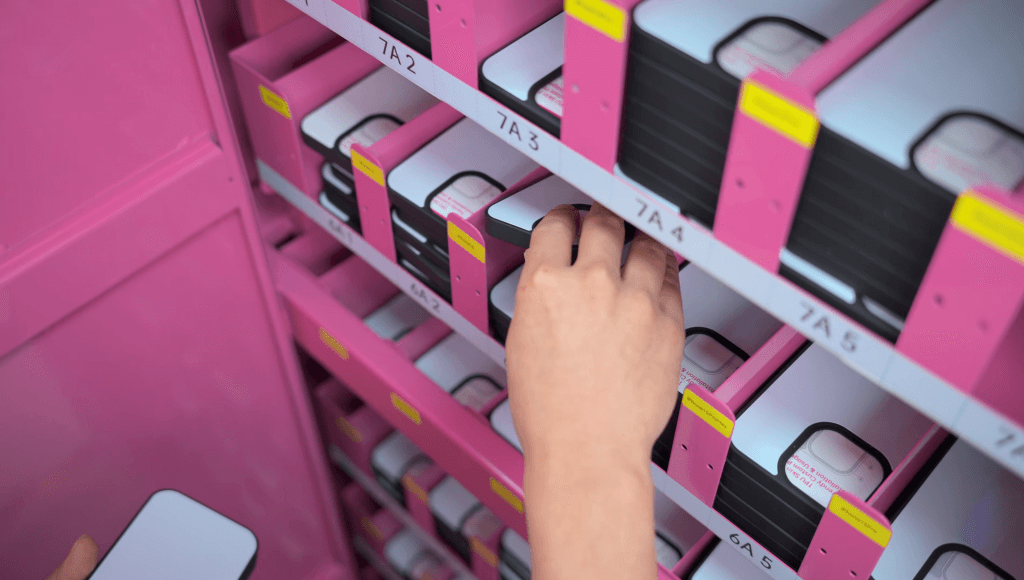
While this business is "low-touch," it is not "no-touch." A DIY phone case printing machine combines mechanical robotics with sensitive inkjet technology. To ensure high-quality prints and zero downtime, you need a smart maintenance routine.
You rarely need to visit the machine daily, but you must "check in" digitally.
Morning Status Check: Use your cloud management app to verify the printer is online and ink levels are sufficient for the day's forecasted sales.
Virtual Customer Service: Display a QR code or support number on the machine. If a customer encounters a UI freeze or a payment error, you should be able to solve it remotely (e.g., issuing a refund or rebooting the machine via the cloud) without driving to the location.
Visit your machine once a week (or twice for high-volume sites). This visit is critical for revenue continuity.
Restock Consumables: Refill blank cases and check ink levels. This ensures you never miss a sale due to an empty slot.
White Ink Circulation: UV white ink can settle over time. Simply verify the machine's auto-circulation system is active, or gently shake the ink tank to keep the pigment mixed.
Waste Ink Disposal: UV printers generate a small amount of waste ink during self-cleaning cycles. Check the waste bottle and empty it if necessary to prevent overflows.
Software & Content Refresh: Don't let your machine look stale. Upload new phone case designs, seasonal templates (e.g., Christmas or Valentine's Day), or update the screensaver ads to attract passersby.
Sensor Cleaning: Dust is the enemy of vending sensors. Use compressed air to clean the optical sensors that detect when a phone case drops. This prevents "delivery error" messages.
Most shopping centres operate under a system called "Casual Mall Leasing" (CML). Rates vary significantly based on foot traffic and location tiers. A standard spot in a local suburban mall might cost $200 - $400 AUD per week, whereas a premium location in a major Westfield or CBD center can range from $800 - $1,500 AUD per week. Always negotiate a trial period before locking in a long-term lease.
To maximize profit while remaining competitive, the "sweet spot" in Australia is between $30 and $45 AUD. This is significantly cheaper than manned kiosks (which often charge $50+) but high enough to maintain a healthy margin. Since your material cost is low, this price point offers exceptional value to customers while ensuring high profitability for you.
Yes. Standard business policies often exclude unattended machinery. You specifically need Public Liability Insurance (usually with a minimum coverage of $20 million AUD) to satisfy shopping centre requirements. Additionally, consider insuring the machine itself against theft, vandalism, and fire to protect your capital asset.
Absolutely. High-end suppliers like Gobear provide white-label solutions, allowing you to apply your own vinyl wrap and branding to the machine's exterior. This is crucial for building a recognizable local brand. You can also customize the idle screen video on the touchscreen to promote your specific offers or Instagram page.
The typical break-even period for a phone case printing machine ranges from 6 to 12 months. However, in high-traffic locations (like universities or busy transport hubs) where you sell 10-15 cases daily, operators have recovered their initial investment in as little as 4 to 5 months. Your ROI depends entirely on location quality and machine reliability.
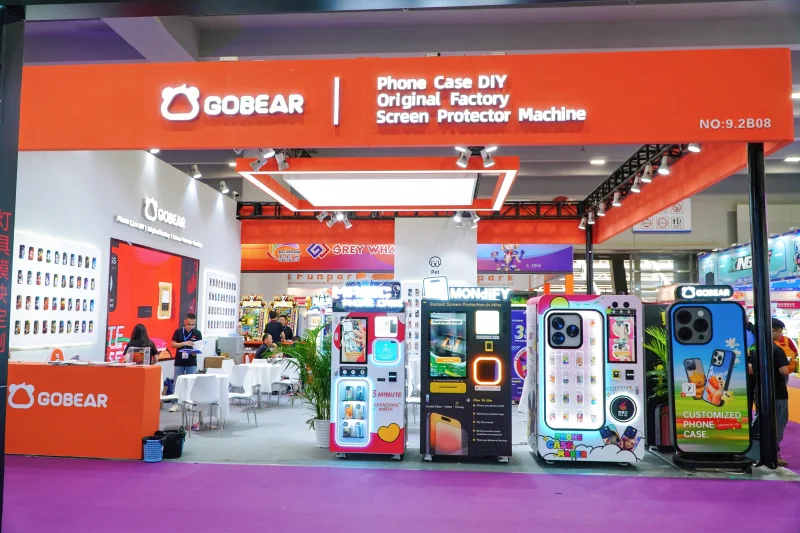
Launching a phone case vending business in Australia taps directly into a growing market that values convenience and personalization. Your success relies on securing a high-traffic location and complying with local councils or mall management. Most importantly, it requires choosing a reliable DIY phone case printing machine.
Gobear supplies more than just hardware; we provide a complete automated retail ecosystem. Unlike standard dispensers, our machines are equipped with industrial Epson I1600 printheads for gallery-quality results and AI-powered design software that makes customization effortless for users. With our 100% IoT cloud system, you can manage inventory and sales from anywhere. Backed by a comprehensive 3-year warranty and zero franchise fees, Gobear ensures your business is built on a foundation of reliability and maximum profitability.
Ready to start your journey? Partner with Gobear today to minimize your risks and maximize your passive income potential in the booming Australian market.
Tell us about your business goals, and our experts will provide a tailored solution and a detailed profitability report. Let's start building your new revenue stream together.