Boost Custom Phone Case Vending Machine Sales - GOBEAR
Boost custom phone case vending machine sales with proven tips to attract customers, maximize profits, and grow your ret...

I'm the COO of GOBEAR. We help entrepreneurs, mall operators, 3C mobile stores, event venues, and campus retailers tap into high-margin, low-maintenance vending models.
If you are wondering whether a screen protector vending machine is a good passive income business, the short answer is yes. It takes the high profit margins of mobile accessories and completely removes the biggest retail expense: human labor. By using AI and robotics to perfectly apply protectors 24/7, you gain a scalable asset that generates revenue without ever hiring an employee.
Here is a closer look at exactly why this model works, the realistic return on investment, and how you can run it with just an hour of your time each week.
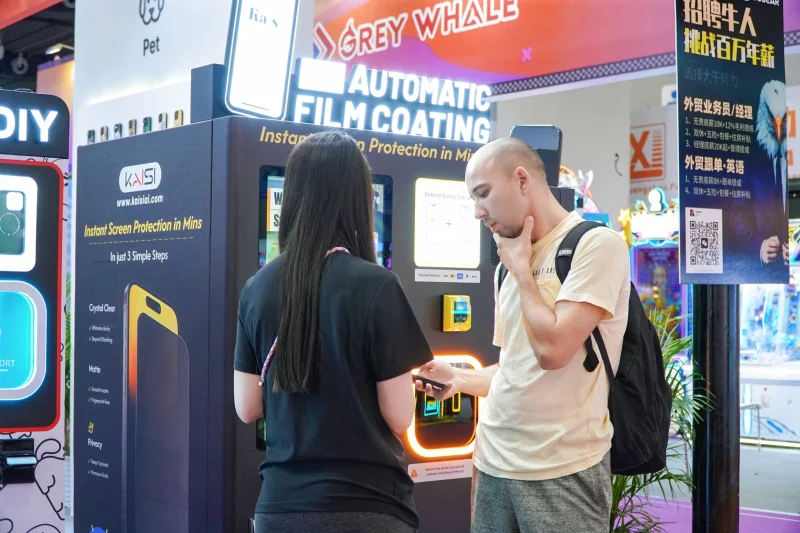
Retail passive income relies on your upfront capital and automated hardware to generate sales without continuous human effort. In the mobile phone accessory industry, traditional kiosks require staff to manually clean screens and apply protectors, which eats into your profit margins through hourly wages and introduces the risk of human error.
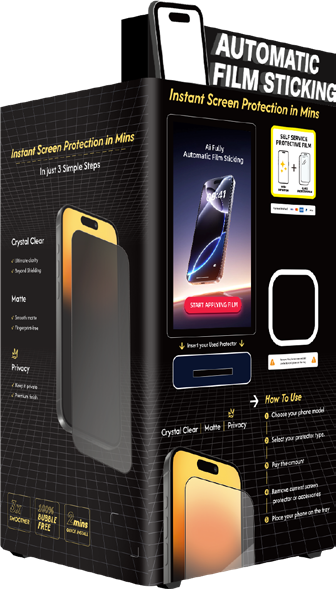
A screen protector vending machine front-loads this workload by shifting the physical application process entirely to the hardware. Once you secure a prime location and install the machine, the internal robotics handle the entire transaction. The machine cleans the screen, perfectly aligns the film, and applies it in just 120 seconds with a 99.9% success rate—completely removing your need for an on-site technician.
Automation strips out the largest operational expense in service-based retail: staff salaries and manual inventory management. Modern screen protector machines leverage connected cloud technology to replace both human cashiers and back-office stock managers.
High-Capacity Inventory System: Rather than manually sorting stock, advanced machines feature over 100 internal cargo lanes capable of holding up to 5,400 ready-to-apply screen protectors.
AI-Driven Model Detection: The machine uses advanced computer vision to scan the customer's device, instantly recognizing the specific phone model and selecting the exact matching protector from its internal inventory of over 2,000 supported models.
Remote Monitoring: IoT digital dashboards allow you to track real-time revenue, monitor exact stock levels for every specific phone model lane, and diagnose mechanical issues remotely from your iOS or Android device.
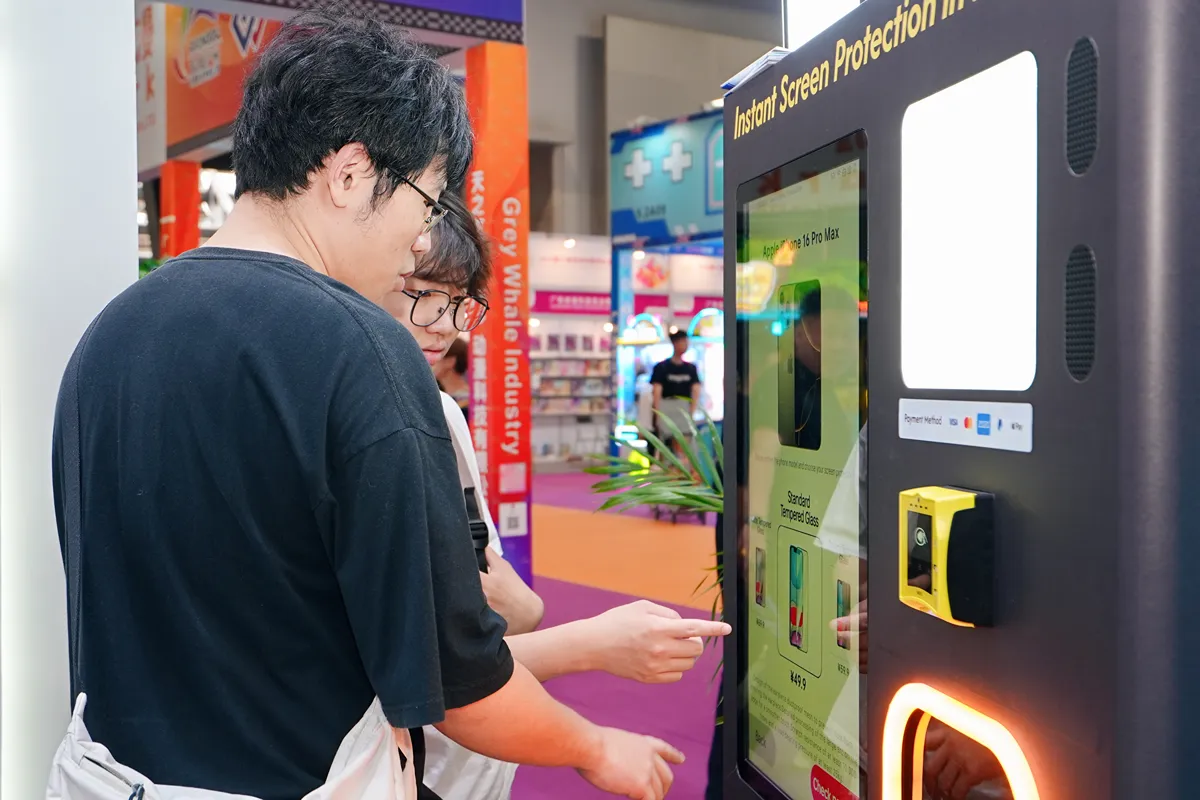
Automated vending replaces continuous staffing with highly efficient digital monitoring. Traditional mall kiosks require skilled technicians who spend several minutes meticulously cleaning and aligning protectors by hand. This manual process is not only slow but also prone to dust and alignment errors, resulting in wasted inventory and unhappy customers.
Screen protector vending machines solve this by utilizing precision robotics and built-in cleaning chambers. They use a HEPA-filtered air chamber to remove 99.97% of dust particles and rely on laser guidance to apply the protector with 0.1mm accuracy. Because the machine can hold thousands of specific protectors at once, your only interaction with the physical hardware happens during scheduled maintenance or when the cloud dashboard alerts you that specific model lanes are running low.
Operating your automated screen protector business requires about one hour of practical, hands-on administrative and maintenance work per machine each week. Because the machine handles the complex application process seamlessly, your human oversight is reduced to simple routine checks.
Digital Oversight: Check your cloud dashboard to track real-time inventory levels across all cargo lanes, evaluate daily transaction volumes, and monitor the machine's uptime.
Financial Tracking: Reconcile weekly revenue from cashless payment systems (like Apple Pay, Alipay, or credit cards), complete bookkeeping activities, and monitor your monthly ROI goals.
Physical Maintenance (7-Day Cycle): Visit the machine to restock the specific phone model protectors that have sold out, empty the internal cleaning waste bin, and sanitize the exterior touchscreens.
Automated screen protector units break even in just three to six months because they capture high retail prices with incredibly low ongoing overhead. Because the machine does the work of a skilled technician, you can charge premium prices—with average transaction values hovering around $45—while keeping monthly operating costs below $50.
|
Performance Metric |
Traditional Kiosk |
Automated Screen Protector Machine |
|---|---|---|
|
Break-Even Timeline |
12 to 18 months |
3 to 6 months |
|
Application Time |
5 to 10 minutes |
120 seconds |
|
Required Labor |
Continuous hourly staff |
Weekly restocking of empty lanes |
This high gross margin means your machine only needs to process a small number of daily transactions to generate substantial monthly net profit. Placements in high-intent locations like shopping malls, transit hubs, or university campuses can generate $500 to $2,000 in monthly passive income per machine.
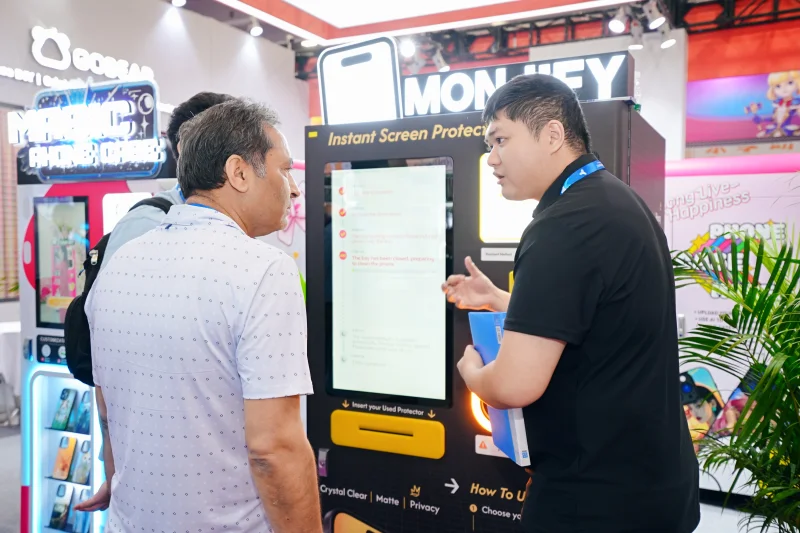
Ultimately, a screen protector vending machine is an outstanding semi-passive income business. By replacing expensive human labor with AI-driven robotics, you can enjoy high retail margins and a fast return on investment with minimal weekly effort.
To succeed, you need reliable equipment. GOBEAR is a leading manufacturer of these advanced screen protector machines, delivering the exact smart technology required for continuous, hands-off sales. Ready to launch your automated retail footprint? Contact us today to get started.
It is a highly efficient semi-passive income model. While the machine applies the protector autonomously and eliminates the need for daily staff, you must still visit weekly to restock the depleted cargo lanes, clean the robotic sensors, and wipe down the exterior glass.
Startup costs typically involve purchasing the commercial-grade machine, initial inventory, and securing a location rent. Because the raw material cost per protector is extremely low and the retail price is premium, operators generally recover their initial capital investment within the first three to six months.
To maximize your passive income, you need locations with high foot traffic and high purchase intent. The most profitable placements include large shopping malls, busy transit hubs like airports or train stations, and university campuses where consumers frequently carry and damage their mobile devices.
Modern screen protector vending machines use smart positioning cameras, automatic dust removal modules, and robotic arms to perfectly align and press the protector onto the user's phone. A built-in HEPA-filtered cleaning chamber removes dust, while controlled pressure application guarantees a bubble-free finish in two minutes.
The machine does not cut blank films; instead, it utilizes a massive internal storage system featuring up to 108 distinct cargo lanes. It uses AI scanning to identify the customer's phone out of 2,000+ supported models, then automatically retrieves the exact pre-cut protector from its storage capacity of over 5,000 units.
Tell us about your business goals, and our experts will provide a tailored solution and a detailed profitability report. Let's start building your new revenue stream together.