GTI China Expo 2025 Highlights for Amusement Industry - GOBEAR
Explore key innovations and top exhibitors shaping growth at GTI China Expo 2025 in the amusement industry.

I'm the COO of GOBEAR. We help entrepreneurs, mall operators, 3C mobile stores, event venues, and campus retailers tap into high-margin, low-maintenance vending models.
If you’re exploring the screen protector vending machine business, the first question is simple: how much can one machine really make each month? The answer depends on more than just foot traffic. Pricing, machine speed, location quality, and inventory strategy all shape your results.
In this guide, you’ll see realistic revenue ranges, profit drivers, and what separates average locations from truly high-performing ones.
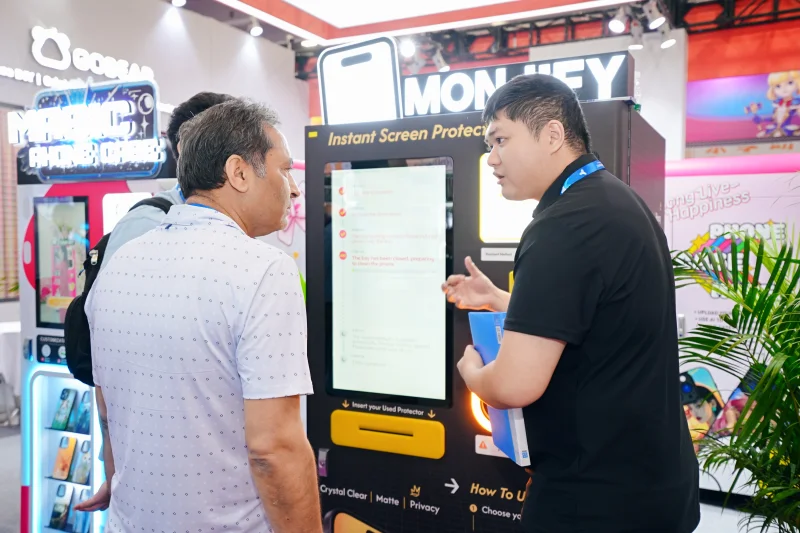
Even when machines are identical, monthly revenue can vary significantly depending on where they are placed. Foot traffic, customer behavior, and dwell time all influence how many visitors eventually become paying customers.
Here is a general performance range for different environments:
|
Location Type |
Typical Monthly Revenue |
|---|---|
|
Small retail stores or gyms |
$800 – $2,000 |
|
Office buildings or universities |
$2,000 – $5,000 |
|
Shopping malls |
$4,000 – $8,000 |
|
Airports and transit hubs |
$6,000 – $10,000+ |
Some locations consistently perform better because they combine steady traffic with strong smartphone usage. Common high-performing placements include:
Shopping malls: High daily visitor volume and strong impulse buying behavior make malls one of the most reliable environments for automated retail.
University campuses: Students rely heavily on smartphones, and locations such as libraries or student centers provide continuous daily exposure.
Airports and transit hubs: Travelers depend on their phones for boarding passes, navigation, and communication, which increases the urgency for screen protection.
Office buildings and service waiting areas: When people are waiting for meetings, appointments, or repairs, they often check their phones, creating a natural opportunity for impulse purchases.
Modern machines store a wide range of pre-cut screen protectors for different phone models. After the user selects their device, the system retrieves the correct protector and completes the application using an automated alignment mechanism in about 120 seconds, allowing you to serve customers quickly even during busy periods.
When evaluating locations, try to imagine how people move through the space and when they interact with their phones. The most profitable placements are not always the busiest ones. They are the places where people have both the time and the reason to stop and use the machine.
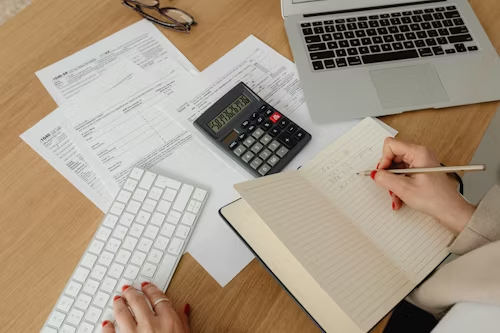
The main cost behind each transaction is the screen protector itself. When purchased in bulk, quality protectors typically cost between $1.50 and $3.00 per unit, while customers usually pay $15 to $30 for a professional application. Machines store multiple protector models designed for different smartphones, allowing you to quickly match the correct protector to each device without complex inventory management.
Beyond product costs, the remaining operating expenses are relatively limited. Payment processors usually charge around 2% to 4% per transaction, while many venues receive a placement commission of roughly 10% to 20% of sales. Electricity and connectivity costs are minimal, often totaling $20 to $50 per month. As the operator, your main tasks involve restocking protectors and checking sales performance through the machine’s cloud dashboard.
When these costs are combined with the pricing structure, many machines achieve net profit margins between 40% and 70%. For example, if your machine completes around 300 transactions per month at an average price of $20, total revenue would reach $6,000. After deducting materials, transaction fees, and location commissions, you could still generate roughly $3,000 to $4,000 in monthly profit.
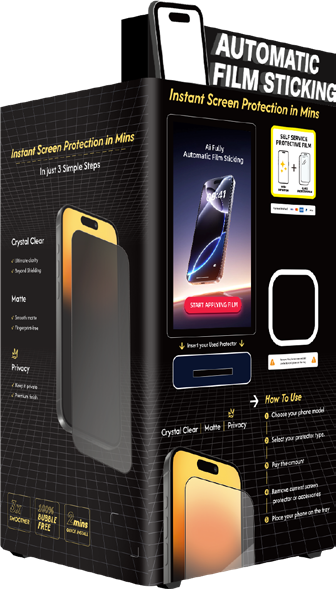
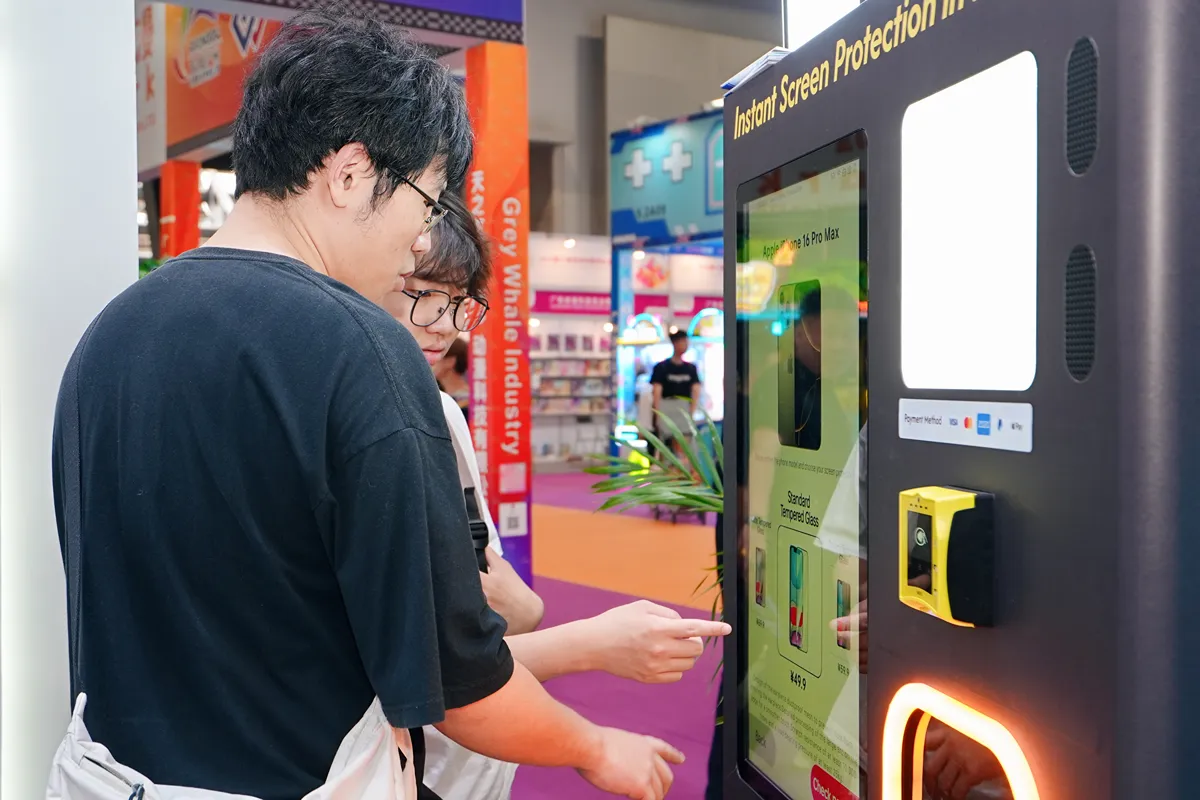
Investing in a screen protector vending machine requires a clear understanding of your capital recovery timeline. While initial costs are fixed, your return on investment depends on a mix of hardware reliability, pricing strategy, and operational efficiency. By analyzing the unit economics, you can project a realistic window for when your machine starts generating pure passive income.
A professional-grade screen protector vending machine typically requires a capital outlay between $10,000 and $15,000. This investment covers the high-precision hardware, integrated payment systems, and the proprietary cloud-management software that powers the unit. Unlike traditional retail, there is no need for a storefront or full-time staff. Your primary startup expenses beyond the machine include the initial film inventory and the first month’s location placement fee, keeping your total entry cost significantly lower than a physical repair shop.
The break-even point is reached when your accumulated net profit equals your total initial investment. To calculate this, you must look at the Net Profit per Transaction. If you sell a premium screen protector for $25.00 with a total landed cost (material + transaction fees + rent) of $5.00, your net profit per unit is $20.00.
The Formula: Break-Even Units = Initial Investment / Net Profit per Unit
Using this calculation, a $12,000 machine reaches break-even after exactly 600 transactions ($12,000 / $20.00 = 600 units). In a steady environment processing 5 to 8 sales per day, most operators recover their full capital in 3 to 6 months.
While location is the primary driver of sales volume, several other variables dictate how quickly you see a return on your investment:
Foot Traffic and Buyer Intent: High-traffic areas like airports or malls are essential, but the type of visitor matters. People in a "buying mood" or those traveling with mobile devices are your highest-converting demographic.
Hardware Reliability and Speed: A machine that processes an installation in under 120 seconds prevents "walk-aways" during peak hours. Frequent downtime or slow software directly extends your payback timeline.
Pricing and Competitive Strategy: Setting your price point too high may lower volume, while pricing too low eats into your margins. Smart operators use cloud data to adjust pricing based on local competition and venue premium.
Operational Uptime: Through remote cloud monitoring, you can ensure the machine is always stocked and functional. Every hour the machine sits empty or "out of order" is an hour of lost ROI.
A screen protector vending machine can be a smart business, but real success comes from matching strong locations with reliable automation, healthy margins, and disciplined inventory management. That is why many operators look to specialized manufacturers like GOBEAR, which focuses on automatic screen protector machines built for unmanned retail, remote management, and scalable deployment.
Ready to turn foot traffic into a more predictable revenue stream? Contact us today to explore the right setup for your market.
Most machines become profitable with 10–15 daily transactions, depending on pricing and location fees. At an average $20 per sale, this can generate $6,000–$9,000 monthly. Busy locations with 20+ daily installations shorten payback and boost profit.
The top factors are foot traffic, pricing, and machine visibility. Machines in malls, transit hubs, or universities usually earn more. Clear signage and easy device selection also help convert more passersby into buyers.
Restocking depends on sales volume and supported phone models. In high-traffic spots, machines usually need refills every 1–2 weeks. Smart cloud dashboards provide alerts so you can restock efficiently without overloading the schedule.
Yes. Thanks to automation and remote monitoring, one operator can oversee several machines. Daily tasks mainly include restocking, checking sales data, and occasional maintenance, making scaling simple without extra staff.
Absolutely. The machines handle installation, payment, and orders automatically. With a good location and basic maintenance, beginners can start small, learn the business, and expand gradually without needing prior experience.
Tell us about your business goals, and our experts will provide a tailored solution and a detailed profitability report. Let's start building your new revenue stream together.