Unmanned Retail and Automated Technology Guide for 2026
Explore 2026 trends in unmanned retail and automated technology. Scale your business with high-ROI vending solutions fro...

I'm the COO of GOBEAR. We help entrepreneurs, mall operators, 3C mobile stores, event venues, and campus retailers tap into high-margin, low-maintenance vending models.
A single peeling case can kill your brand's reputation overnight. In the competitive custom phone case business, your printing technology is either your biggest bottleneck or your secret weapon for scaling.
If you’re tired of dull colors, slow production, or scratch-prone finishes, you need a method that actually keeps up with your growth. Let’s skip the fluff and look at the data-driven tech that will define phone case printing in 2026.
To help you choose the right direction, here is a detailed breakdown of how these technologies perform across the metrics that matter most to a growing business.
|
Method |
Best for |
Durability & Finish |
Startup Investment |
Production Speed |
|---|---|---|---|---|
|
UV Printing |
On-demand retail and automated batch production |
High. Sharp, scratch-resistant textures that sit on the surface. |
Higher. Requires a professional UV flatbed printer. |
Very Fast. Cures instantly; ready for shipping in 120 seconds. |
|
Sublimation |
Edge-to-edge photos and budget-conscious startups |
Maximum. Ink is infused into the case; will never peel or crack. |
Low. Simple setup with a sublimation printer and heat press. |
Moderate. Requires 45-60 seconds of heat pressing plus cooling. |
|
DTF Transfer |
Versatile materials like leather, fabric, and TPU cases |
High. Flexible, "rubber-like" feel that survives bending and daily use. |
Moderate. Requires a DTF printer, adhesive powder, and a press. |
Moderate. Multi-step process (print, powder, cure, and press). |
|
Laser Engraving |
Premium niche markets (wood, leather, or metal) |
Permanent. Physical etching into the material; won't fade or wear off. |
Moderate. Requires a high-precision fiber or CO2 laser system. |
Detailed. Takes 5-8 minutes depending on design complexity. |
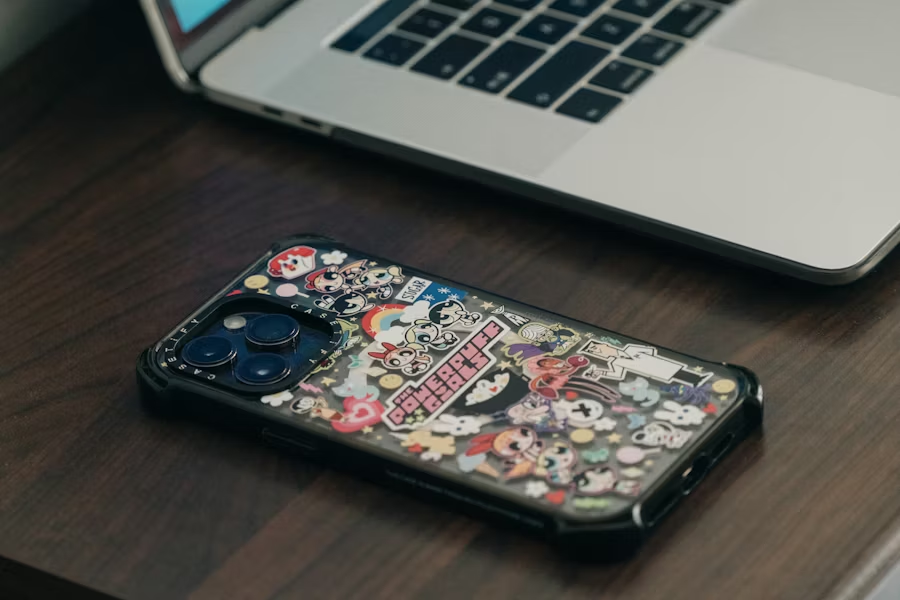
UV printing has become the industry standard for high-volume, on-demand phone case manufacturing. This digital method uses ultraviolet light to instantly cure specially formulated ink as it hits the surface. This ensures sharp details and a rugged finish that lasts.
The process is direct and highly efficient. A phone case printing machine equipped with industrial-grade precision heads applies UV-curable inks directly onto the case. Immediately following the print head, a high-intensity UV light solidifies the ink. This instant curing prevents the ink from spreading or bleeding. The result is much finer detail than methods that require air drying.
Enhanced durability: The cured ink forms a hard, resilient layer that resists scratches. These prints do not peel or degrade over time.
Rapid production speed: Immediate drying eliminates delays in your workflow. A custom case is ready in just 120 seconds, moving from design to finished product almost instantly.
Superior print quality: This method achieves high-resolution images with crisp details and exceptionally vibrant colors.
Advanced customization: UV printing is versatile. It can be integrated with clear epoxy resin coatings to create unique textured or glossy finishes.
Our AI-powered machines print custom phone cases in about 120 seconds, creating a premium product with minimal overhead. With cloud-based management, no monthly software fees, and a 3-year warranty, you get a turnkey solution designed for rapid ROI in high-traffic locations.
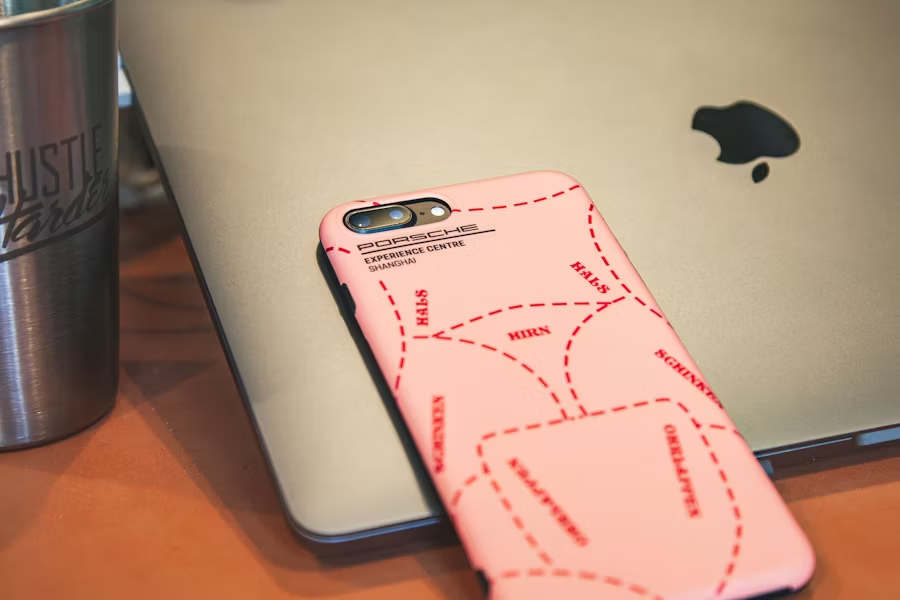
Sublimation is a printing method that uses heat and pressure to transfer dye directly into the phone case material. This process creates vibrant, photographic-quality designs. Because the ink becomes part of the case itself, it is exceptionally durable.
It starts with a special ink that turns from a solid into a gas when subjected to high heat. This gas infuses into the polymer-coated surface of the phone case. As the case cools, the ink solidifies and becomes a permanent part of the material. This method is compatible with hard plastic (polycarbonate) or TPU cases with a special polymer coating.
Optimal temperature: A heat press set to approximately 200°C ensures the ink properly converts into a gas.
Pressing time: A duration of 45–60 seconds under consistent pressure allows the dye to fully bond with the material.
Print quality: The process achieves continuous tone output. This means it produces smooth gradients and bright images without visible dots.
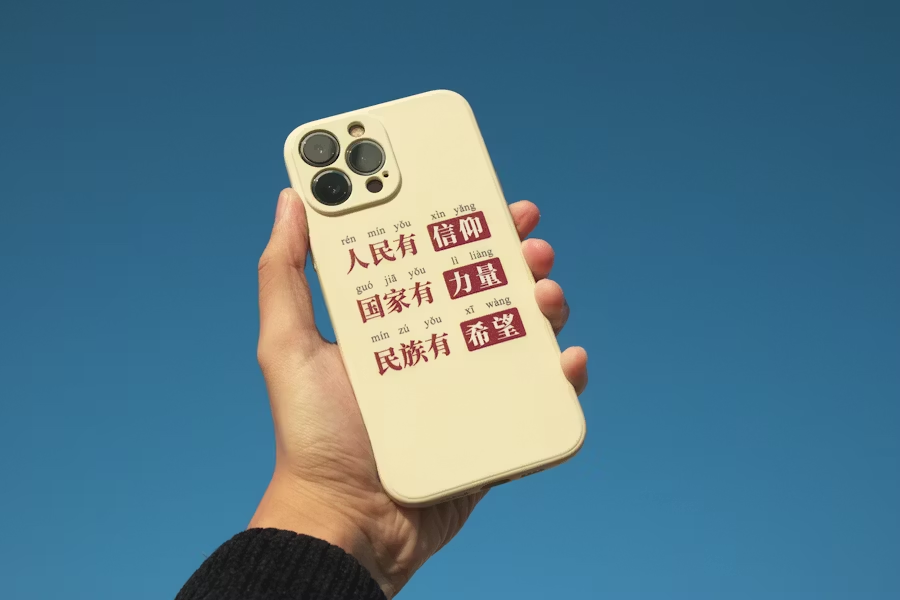
Direct to Film (DTF) is a transfer printing method used for creating durable, full-color designs on cases where other methods might fail. It is a solution for difficult or unconventional surfaces.
Design printing: A design is printed onto a specialized DTF transfer film using water-based pigment inks.
Adhesive application: The film is coated with a fine adhesive powder. It then passes through a curing unit to activate the glue.
Heat pressing: A heat press machine bonds the ink and adhesive layer directly onto the case surface.
Film removal: After a cold peel, the film is removed. This leaves a crisp design without any sticky residue.
DTF offers unmatched flexibility across different materials. Unlike sublimation, it works on a wide range of surfaces, including plastics, TPU, and even leather. It eliminates the need for weeding or complex stencils, making it highly efficient for small to medium batches.
Laser engraving is a high-precision customization method that uses a focused laser beam to vaporize material from a surface. It is valued for its speed, accuracy, and its ability to create a permanent, physical mark.
Speed and accuracy: Modern laser systems can move at speeds up to 4000mm/s. With a motion accuracy of 0.00199mm, they can produce highly detailed images rapidly.
Proven capacity: In real-world production, operators have engraved over 1,200 bamboo cases in just two weeks while maintaining a scrap rate below 3%.
Typical settings: For materials like wood, common parameters include a speed of 1500mm/s and a resolution of 300 DPI.
Laser engraving creates exceptionally detailed marks that don't fade or peel. It is perfect for intricate logos and fine-art designs. It works beautifully on popular materials like wood, silicone, leather, and even coated metals.
Selecting the right path depends on your product line and budget. It also depends on how much you want to automate your workflow.
For standard flat-back cases: A UV flatbed printer is the practical choice. It offers a faster return on investment and a clear path to scale toward a fully robotic workflow.
For complex, contoured cases: If your brand focuses on highly contoured or fully wrapped designs, you may require specialized Direct-to-Object (DTO) printers. These machines handle curvature flawlessly.
For high-end bespoke craftsmanship: If your target market values the tactile feel of organic materials, laser engraving is the only way to deliver that premium, permanent finish.
For starting on a budget: Sublimation remains the most cost-effective entry point. It allows you to produce vibrant, full-wrap phone cases with low equipment costs.
Consumable costs are remarkably low compared to the retail value of a finished case. Essentials like ink, films, and powders cost very little per unit. This low overhead is why the custom phone case market remains so profitable for businesses of all sizes.
The secret is white ink. Since clear cases are transparent, you must print a solid white base layer behind your design. This ensures your colors stay vibrant, regardless of whether your customer has a black, silver, or gold phone.
Not if you are using professional-grade technology. UV-cured inks and sublimation dyes are specifically engineered to be stable and resistant to wear. These industrial methods are designed to survive thousands of pocket-ins-and-outs without losing their luster.
Standard UV flatbeds and DTF transfers excel at printing on the flat back of the case. If you want a seamless full wrap that covers the sides, 3D vacuum sublimation is the traditional choice. However, most modern brands find that high-quality back printing satisfies the vast majority of customer demand.
High resolution is everything. Always aim for at least 300 DPI at the actual size of the case to avoid fuzzy edges. PNGs with transparent backgrounds are the gold standard for photos, while vector files are perfect for keeping logos razor-sharp.
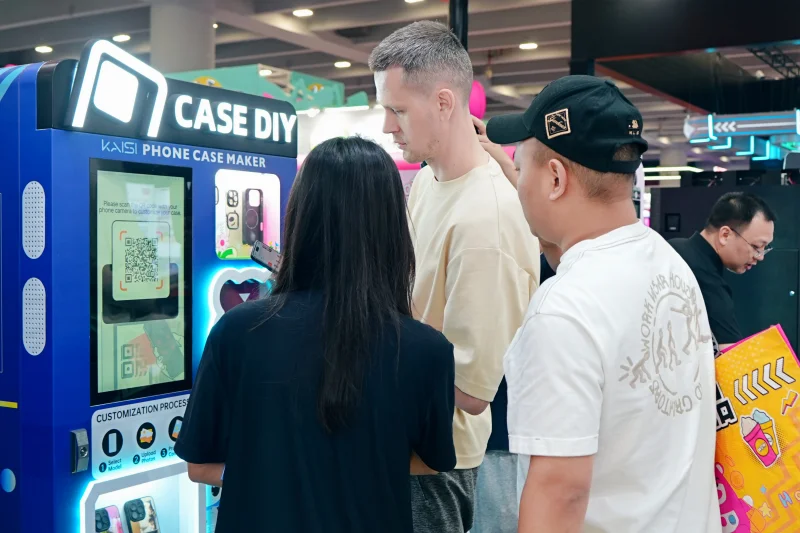
The foundation of a profitable custom phone case business is the technology that brings your designs to life. While every method we’ve discussed has its place, the industry is clearly shifting toward speed, durable finishes, and seamless automation.
At Gobear, we’ve spent years mastering these requirements. As a specialized manufacturer of phone case printing vending machines, we bridge the gap between complex production and retail convenience. Our automated phone case vending machines utilize industrial-grade UV printing technology. This allows you to deliver premium, custom products to your customers in minutes.
Ready to transform your business with cutting-edge automation? Partner with us today to streamline your production and lead the future of on-demand customization.
Tell us about your business goals, and our experts will provide a tailored solution and a detailed profitability report. Let's start building your new revenue stream together.