Best Locations for a Screen Protector Vending Machine in 2026
Discover the best locations for a screen protector vending machine. Maximize profits in high-traffic spots. Scale your b...

I'm the COO of GOBEAR. We help entrepreneurs, mall operators, 3C mobile stores, event venues, and campus retailers tap into high-margin, low-maintenance vending models.
When you enter the automated retail sector, your equipment choice is the primary driver of your long-term profitability. While ice vending remains an established model for steady income, you may find that newer custom product machines offer superior capital efficiency and operational flexibility.
In this guide, you will find a direct comparison of the financial and operational realities for both models, grounded in 2026 industry benchmarks.
Your initial capital requirement represents a significant difference in strategy. Ice vending is an infrastructure-heavy investment, whereas custom product retail focuses on modularity and low entry barriers.
| Investment Category | Ice Vending Machines | DIY Phone Case Vending |
|---|---|---|
| Machine Purchase | $50,000 to $150,000 | $3,000 to $12,000 |
| Site Preparation | $5,000 to $15,000 | $0 to $500 |
| Permits and Compliance | $500 to $6,000 | $50 to $500 |
| Logistics and Install | $2,000 to $5,000 | $200 to $1,000 |
| Working Capital | $10,000 to $20,000 | $1,000 to $3,000 |
| Total Startup Estimate | $67,500 to $197,000 | $4,250 to $17,000 |
Ice vending represents a capital-intensive commitment for your business. Because these machines are heavy-duty equipment, they require permanent site modifications. If your chosen location underperforms, the money you spend on site improvements like concrete pads and utility lines is generally non-recoverable.
In contrast, DIY phone case vending machines offer you greater financial flexibility. With an entry cost starting as low as $4,250, you can test a location with minimal risk. If your sales targets are not met, you can relocate the machine to a new site within hours, preserving the value of your initial investment.
In 2026, you should measure your operational efficiency by how little human intervention your machines require. Both models use automation to minimize your labor costs, but their expense structures scale differently.
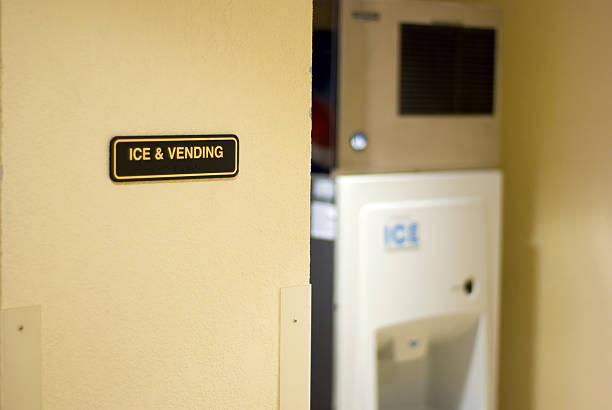
Ice Vending: Your primary monthly costs include site rent from $200 to $800 and utilities from $50 to $200. Maintenance is your most critical variable. Industry data suggests you should set an annual repair budget of $1,000 to $3,000 to ensure the ice-making components remain functional during high-demand periods.
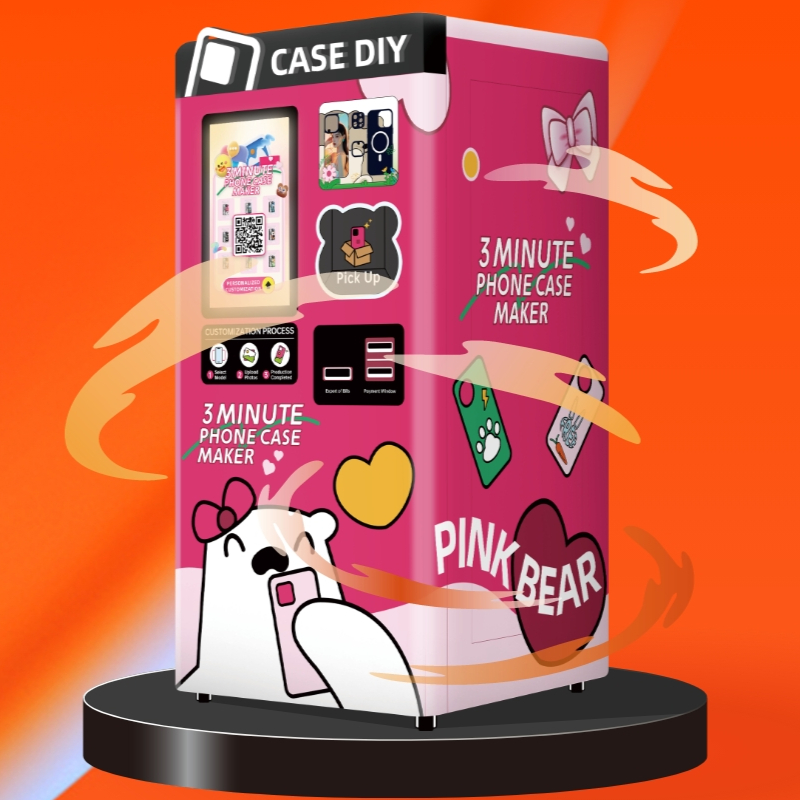
DIY Phone Case Vending: These machines leverage AI-driven stock alerts to notify you exactly when a refill is needed. While you will have a cost for raw materials, these products do not expire. On average, a custom machine requires a restocking visit once every 7 to 10 days, allowing you to manage multiple machines across a city without a large support team.
Your sales volume will fluctuate throughout the year, though the impact depends on your product category and machine placement.
Ice Vending: Your sales will peak during summer months in correlation with outdoor activity. Market data shows that well-placed machines generally experience a 20% to 30% revenue decrease during colder months. However, you can rely on commercial clients like restaurants and event organizers to provide a consistent year-round revenue baseline.
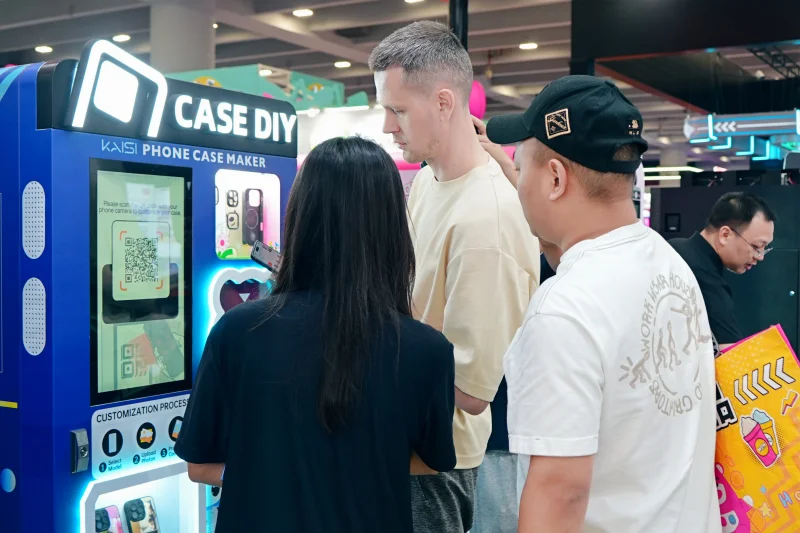
DIY Phone Case Vending: These machines offer you more consistent year-round performance because they are typically located indoors. Your revenue is driven by consumer shopping patterns rather than temperature. You will likely see sales increases during holiday periods in December and February, which balances the overall income of your business.
Ice vending offers you exceptional margins because the raw materials are inexpensive, while DIY products allow you a higher price markup driven by instant personalization.
Ice Vending: Your Gross Profit Margin (GPM) can reach 90% to 98%. The production cost for a 10lb bag, which includes water, electricity, and the bag, is often between $0.10 and $0.40.
DIY Phone Case Vending: These machines achieve margins between 70% and 85%. Your ability to offer instant personalization justifies a premium retail price. For example, a blank item costing $2.00 can be sold for $25.00 once customized, requiring fewer transactions to reach your daily revenue targets.
The time required to recover your ROI (Return on Investment) is the key differentiator between a heavy asset and a modular retail machine.
| Financial Metric | Ice Vending Machines | DIY Phone Case Vending |
|---|---|---|
| Average Payback Period | 12 to 36 Months | 3 to 12 Months |
| Daily Sales for Break-Even | 15 to 25 Bags | 15 to 22 Cases |
| Fixed Infrastructure Risk | High: $5k to $15k sunk costs | Minimal: $0 to $500 recoverable |
| Asset Lifecycle | 10 to 15 Years | 5 to 8 Years |
| Relocation Flexibility | Low | High |
The risk of sunk costs is a major factor you must consider in ice vending. A significant portion of your capital goes into site improvements that cannot be recovered if the location underperforms. Most operators do not reach the break-even point until year two or three, but once achieved, the durable hardware allows you over a decade of high-margin profit.
DIY phone case vending machines prioritize the speed of capital recovery. Because your initial investment is lower and infrastructure costs are negligible, your risk is distributed differently. If your machine is not hitting its sales target, you can move it to a different mall in a single afternoon.
Choosing between these two paths requires you to assess your available resources, your access to locations, and your long-term business objectives.
You should choose ice vending if you prioritize asset durability and have access to high-traffic outdoor real estate.
Land Ownership: If you own a gas station, a marina, or a large campground, ice vending is a natural extension of your property value.
Capital Depth: This model suits you if you have over $100k in liquid capital and are looking for a long-term asset.
Commodity Focus: Best if you want to avoid inventory management entirely and prefer selling a universal necessity.
Custom retail is your superior choice if you are an agile entrepreneur who wants to maximize capital turnover and minimize initial risk.
High-Traffic Access: If your connections are with malls, airports, or tourist centers, you can capture higher margins from impulse buyers.
Risk Sensitivity: If you are unsure about a specific location, the modularity of these machines allows you to test and pivot without losing your infrastructure investment.
Growth Speed: Ideal if you want to start small and use the profits from your first few months to fund a rapid expansion.
Scalability involves your transition from a single machine owner to a multi-unit business operator. In 2026, your strategy for expansion differs fundamentally between these two models.
Scaling your ice vending business involves securing exclusive utility and placement rights. Because these machines require permanent infrastructure, securing a site prevents competitors from easily entering the same location. Once established, these routes often sell for significant multiples, ranging from 3x to 5x EBITDA (Earnings Before Interest, Taxes, Depreciation, and Amortization), to institutional investors.
DIY phone case vending machines allow you to expand faster through quicker capital recovery. Because the machines are easy to install, you can place multiple machines across a region in the time it takes to set up one ice machine. This allows you to use recovered capital from early machines to fund additional ones quickly. In 2026, the rise of ESG (Environmental, Social, and Governance) compliant packaging has further boosted the appeal of these machines to your modern consumers.
Yes, General Liability Insurance is a must to protect against slip-and-fall claims. For a small fleet, expect to pay around $400 to $700 annually. If you run an outdoor ice machine, consider adding property coverage for vandalism.
You typically have two levers: a Flat Rent of around $200 per month or a Revenue Share model where you pay 10% to 20% of sales. Pro Tip: For custom machines, offering a small revenue share is often the easiest way to convince a mall manager to say "yes" to a trial run.
Don't worry, you won't need to drive there. Modern systems allow you to issue remote refunds instantly via your phone. Just ensure you display a support email or Google Voice number on the screen to handle complaints quickly.
Absolutely. For ice machines, banks often provide equipment loans with 3 to 5 year terms. For lower-cost custom machines ranging from $4,000 to $10,000, many operators use business credit cards or third-party lenders like Klarna for Business to start with minimal cash down.
Highly recommended. An LLC (Limited Liability Company) separates your personal assets, like your house and car, from your business liabilities. If a machine tips over or malfunctions, an LLC ensures your personal savings stay safe. It's a small cost for peace of mind.
Your decision between these two models ultimately depends on your capital availability and your preferred timeline for a return on investment.
Ice vending remains a solid path if you are looking for a durable, high-margin utility business with minimal inventory management. It requires a significant upfront commitment and a longer horizon for recovery, but it rewards you with an asset that can produce steady income for over a decade.
If you prioritize rapid capital recovery and market agility, custom vending machines are your superior choice. This model allows you to start with a smaller footprint and scale your business across multiple locations in a fraction of the traditional timeframe.
Within this category, Gobear stands out as a specialized manufacturer of DIY phone case vending machines focused on high-traffic, impulse-driven retail. Due to its significantly lower entry cost and high profit margins, the Gobear system offers the potential for a much faster return on investment compared to traditional vending models. If you are ready to capitalize on the high-margin personalization trend, partner with us to launch your first machine and build your automated retail business.
Tell us about your business goals, and our experts will provide a tailored solution and a detailed profitability report. Let's start building your new revenue stream together.